
For years, traditional signage did its job well. A sign was installed, it stayed in place, and it delivered the same message for months… Sometimes years. That worked when marketing cycles were slower and updates were occasional.
But business doesn’t move that way anymore. Menus shift weekly. Events are announced overnight. Flash promotions can last a few hours. Meanwhile, customers are used to motion, color, and instant updates: thanks to platforms like TikTok, Instagram, and YouTube. Static graphics simply don’t hold attention the way they once did.
That’s why businesses are steadily replacing printed signage with LED video walls. These systems aren’t just brighter versions of old signs. They’re adaptable communication tools powered by modern LED technology, practical LED solutions, and LED wall packages built for speed.
This change isn’t only about visual impact. It’s about staying relevant in an environment where messaging needs to evolve constantly. Intelligent LED devices allow brands to communicate in real time, and that’s quickly becoming essential, not optional.
Traditional Hidden Costs Vs LED Walls Efficiency
Printed signage feels straightforward. But the real expense often shows up later.
The Real Cost of Printing, Replacing, and Reinstalling
Every update triggers the same process: design, print, ship, install, remove… Then repeat. Seasonal campaigns expire. Logos get refreshed. Materials fade or tear. The cycle never really ends.
Over time, those recurring costs add up. LED walls operate differently. Once installed, content changes happen digitally. No reprints. No freight. No reinstallations.
With a 5-year warranty and modular features like magnetic modules and full front service access, upkeep becomes manageable. If something needs attention, individual LED panels can be serviced quickly without dismantling an entire structure. That alone protects long-term ROI.
Labor and Downtime: Silent Budget Killers
Every physical signage change requires labor. That means scheduling installers, using equipment, and sometimes blocking off customer areas.
LED display panels remove that friction. Updates happen through software. Asynchronous systems let individual LED screens run unique content, while synchronous systems coordinate messaging across multiple locations instantly. A franchise can launch the same promotion nationwide without sending a single crew into the field.
That efficiency doesn’t just save time; it protects revenue.
Businesses Want One System That Scales
Growth complicates logistics. More locations mean more signage to manage.
Modern LED panels connect to centralized control systems using video processors and sending cards such as NovaStar. They integrate with media players, software platforms, and other hardware technologies, making expansion straightforward. Instead of rebuilding infrastructure, businesses simply extend it.
LED solutions grow alongside the brand.
LED Technology Differential Factor
The difference between static and dynamic messaging is obvious at first glance. But the technical advantages go further than movement alone.
Motion Wins Attention
People naturally notice motion before anything else. In crowded environments, movement cuts through noise.
High refresh rate performance keeps visuals smooth on camera and in person. Strong resolution ensures clarity from different distances. Pixel pitch determines how sharp content appears up close; tighter spacing improves foreground detail without viewers ever thinking about the technical math behind it.
One Screen Can Replace Dozens of Signs
A single LED screen can rotate promotions, sponsor ads, brand storytelling, directions, and announcements within minutes. Instead of printing multiple boards, businesses control everything from one digital interface.
Because LED display panels integrate with HDMI inputs, live feeds, streaming platforms, and other digital sources, they function as communication hubs rather than single-use displays.
You Can Change Messaging Instantly
A restaurant can update specials before the lunch rush. A gym can adjust class schedules in real time. A church can highlight weekend events hours before service.
Behind the scenes, software, a video processor, and a sending card coordinate the content. From the outside, it simply feels seamless; which is exactly the point.
Whether it's setup or ongoing care, we provide expert assistance every step of the way to keep your LED wall in top condition.

Why LED Screens Work in Every Industry
The appeal of LED walls isn’t limited to one niche. Their flexibility makes them practical across industries.
Retail and Shopping Centers
Retail thrives on visibility. Window graphics, promotions, and seasonal campaigns compete constantly.
LED panels offer improved clarity through optimized pixel pitch. Wide viewing angles help capture foot traffic from multiple directions. Adaptive brightness keeps LED panels vibrant throughout the day, increasing the likelihood that customers step inside.
Restaurants, Bars, and Hospitality
Menus change. Events rotate. Live games draw crowds.
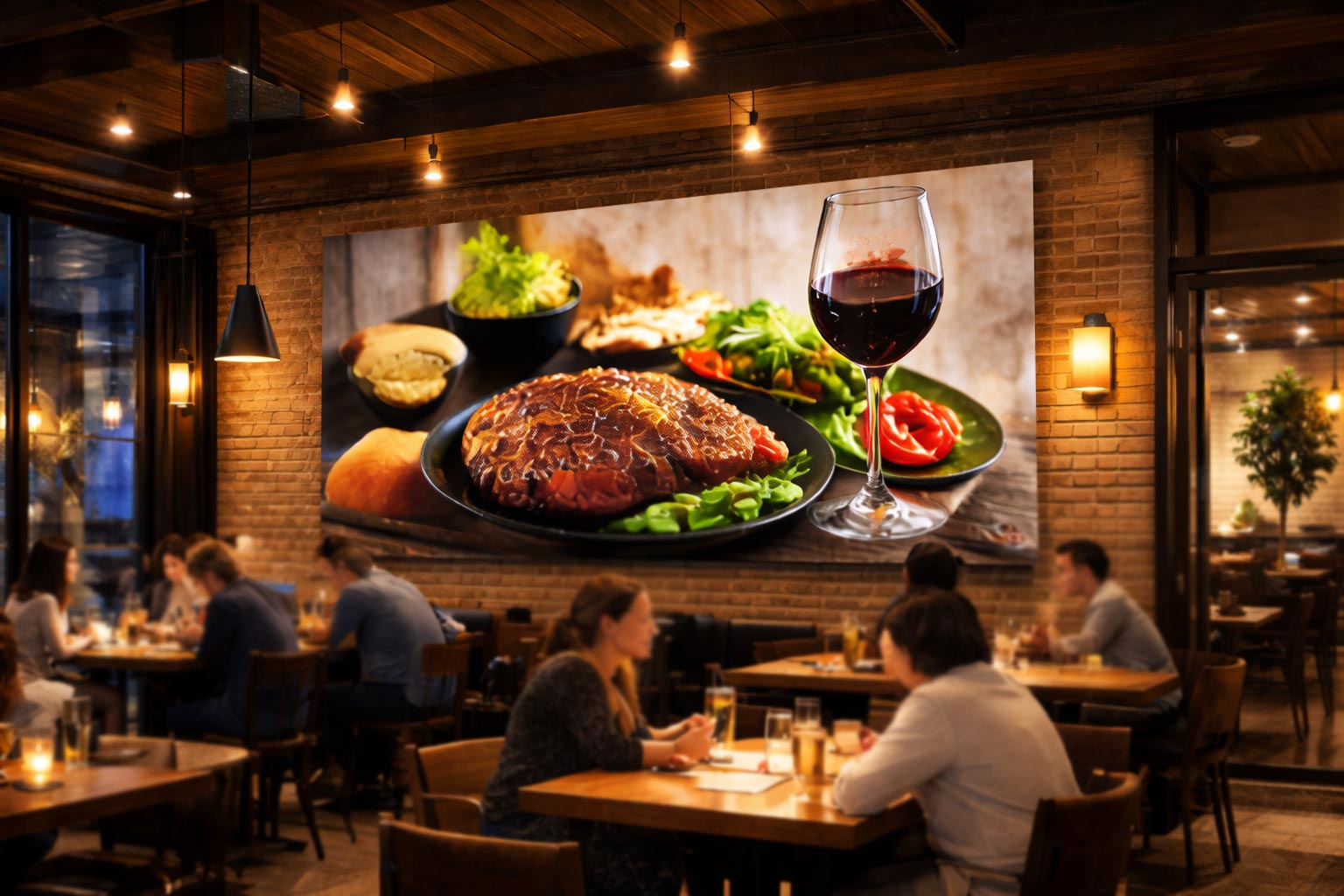
Digital menu boards powered by LED displays allow immediate updates without printing costs. High resolution ensures text remains readable, and brightness control keeps visuals comfortable in indoor settings. Durability is especially important for outdoor LED screens placed in high-traffic environments that operate long hours.
Corporate, Universities, and Public Spaces
Clear communication matters in lobbies, campuses, and shared spaces.
LED screens allow centralized messaging through synchronous and asynchronous systems. Conference areas can display live dashboards, while campuses coordinate announcements across multiple buildings without confusion.
Outdoor Advertising and Storefronts
Outdoor signage faces harsh conditions: sun, rain, dust.
LED walls are built with durability in mind, including IP45 and IP65 protection ratings. They remain visible in daylight, lightweight compared to traditional structures, and scalable in size. For storefronts, that translates into fewer replacements and stronger long-term presence.


LED Display Panels Are Becoming the New Standard
The transition isn’t experimental anymore. It’s practical.
What to Look For When Choosing an LED Display Supplier
Beyond brightness and size, support matters. LED wall installation methods (whether ground support, wall-mounted, or flown method) should match the environment. Full front service design simplifies maintenance.
A dependable supplier evaluates real needs and recommends the right LED solutions, rather than just selling inventory.
It’s Not a Trend: It’s the New Default
Businesses are not switching for novelty. They’re choosing LED screens because they deliver flexibility, scalability, and measurable ROI that printed signage can’t.
This shift reflects how customers consume content; and how brands must respond.
American LED Screens
In a rapidly evolving market, experience makes a difference. American LED Screens combines industry knowledge with nationwide service, product guidance, integration support, durable hardware, and a 5-year warranty.
As companies rethink how they communicate, investing in advanced LED technology and reliable LED devices feels less like a bold move; and more like the natural progression of modern signage.
Get everything you need