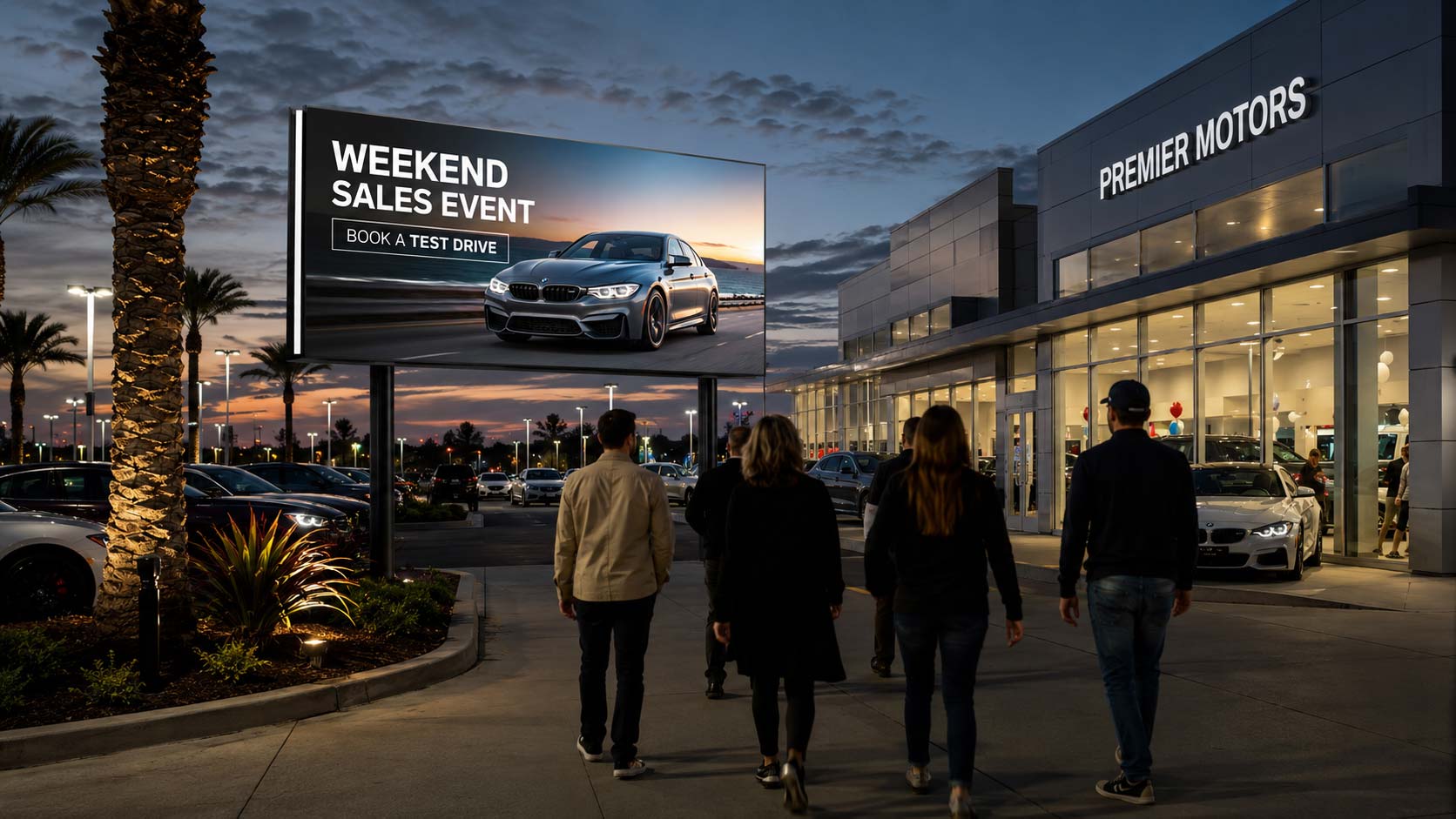
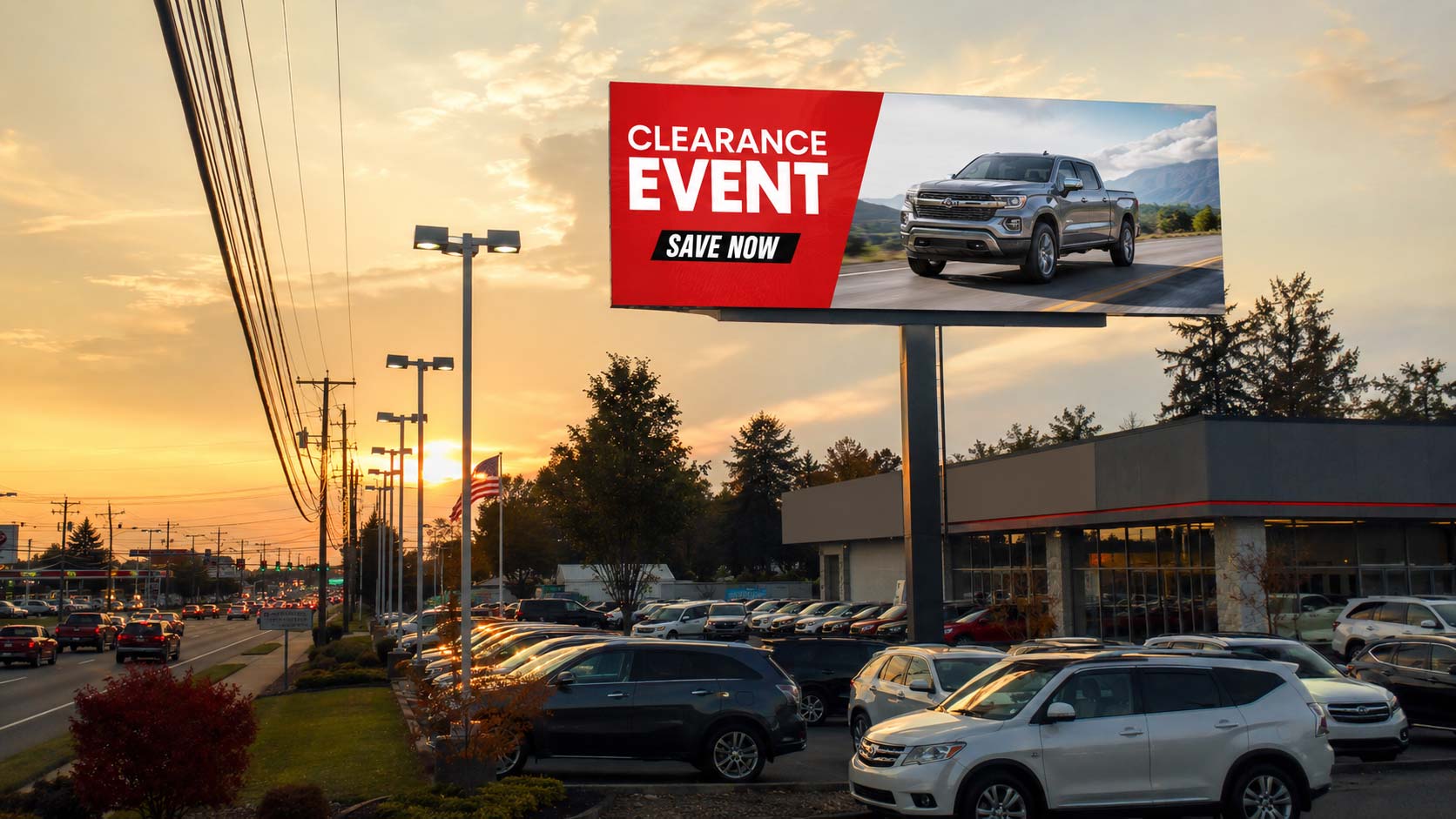
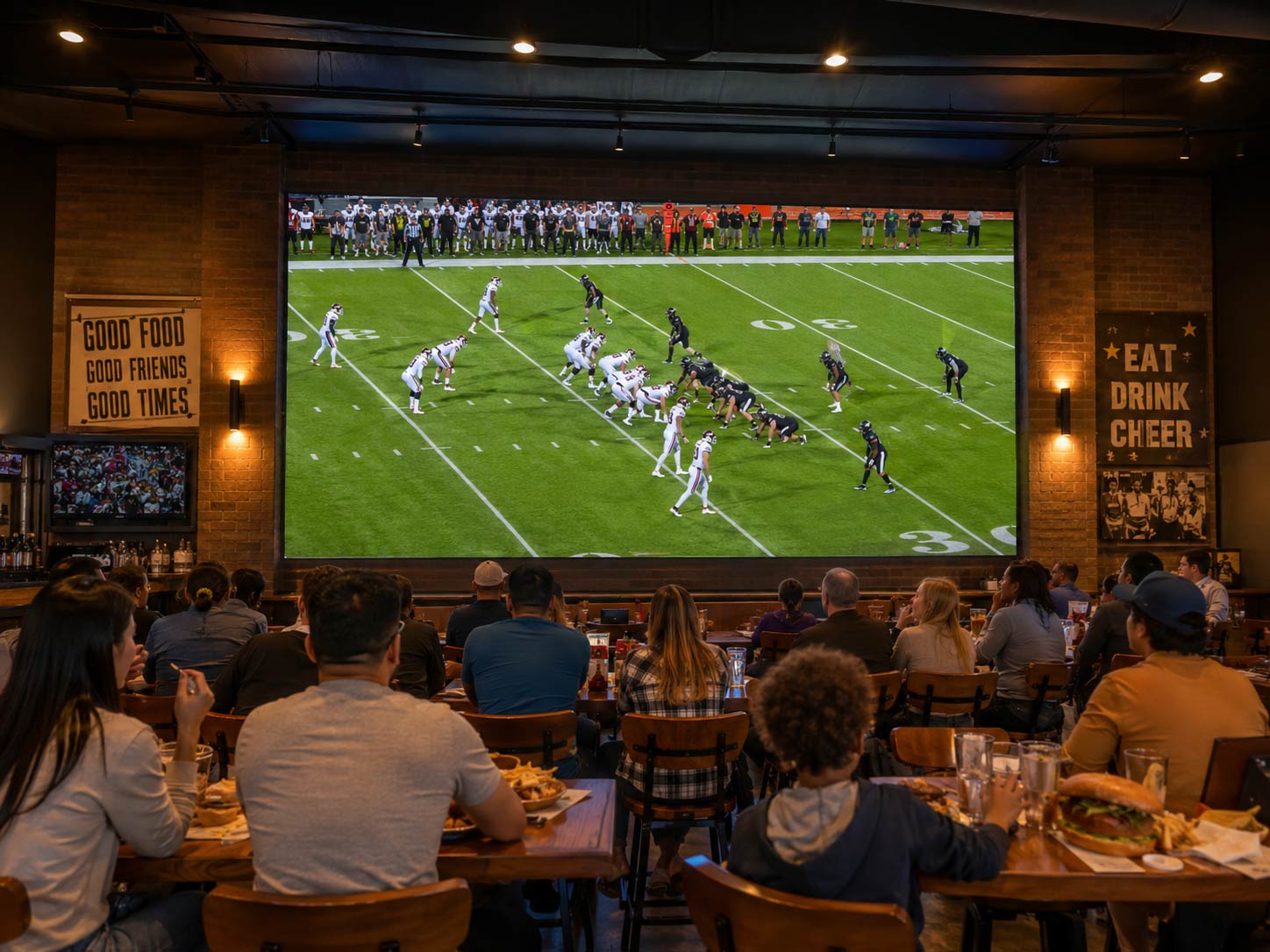
Dealership sales depend on visibility, timing, and inventory turnover. Yet vehicle availability, pricing, and promotions can change daily, while printed signage often takes days to update. By the time a banner is designed and installed, the featured vehicle may already be sold, leaving customers with outdated information.
Outdoor LED technology turns the dealership’s street-facing space into a flexible, real-time marketing channel. It can capture attention within seconds, spotlight priority vehicles, and update offers without the cost or delay of reprinting.
Using LED video walls effectively does not require advanced technical knowledge. The goal is simple: bring more qualified traffic into the showroom, give slower-moving vehicles greater exposure, and support faster inventory turnover.
Why Static Signage Falls Short on a Fast-Moving Lot
A dealership lot changes constantly, but printed communication remains fixed. That mismatch creates missed opportunities, especially when the vehicles, pricing, and financing options visible outside no longer reflect what the sales team is actively promoting.
Inventory Changes Faster Than Printed Campaigns
Prices, factory incentives, financing terms, and model availability may shift several times in one week. With printed materials, every change requires new design, production, delivery, and installation.
LED screen packages allow the marketing team to replace a sold vehicle, revise a payment offer, or feature a new arrival within minutes. The message stays current, and the dealership avoids recurring printing costs.
Visibility Has to Compete With the Road
Drivers may have only a few seconds to notice and understand a roadside message. Static signs can fade into the background, particularly for commuters who pass the same dealership every day.
LED displays use brightness, contrast, and motion to break through visual familiarity. Clear imagery and concise messaging help the dealership communicate before the driver has passed the lot.
The Dealership Becomes Its Own Media Channel
With its own digital display, a dealership can use the property as an always-available advertising platform instead of relying only on third-party media or fixed signage. Content can change by inventory priority, time of day, season, or campaign.
- Feature new arrivals before they are added to every online listing.
- Give slower-moving units more exposure during high-traffic periods.
- Update discounts and financing offers as soon as they change.
- Promote fixed monthly payments, special rates, or bonus programs.
- Build awareness for weekend and holiday sales events.
- Advertise service appointments during lower-demand sales periods.
- Adapt messaging for seasonal campaigns without replacing physical materials.
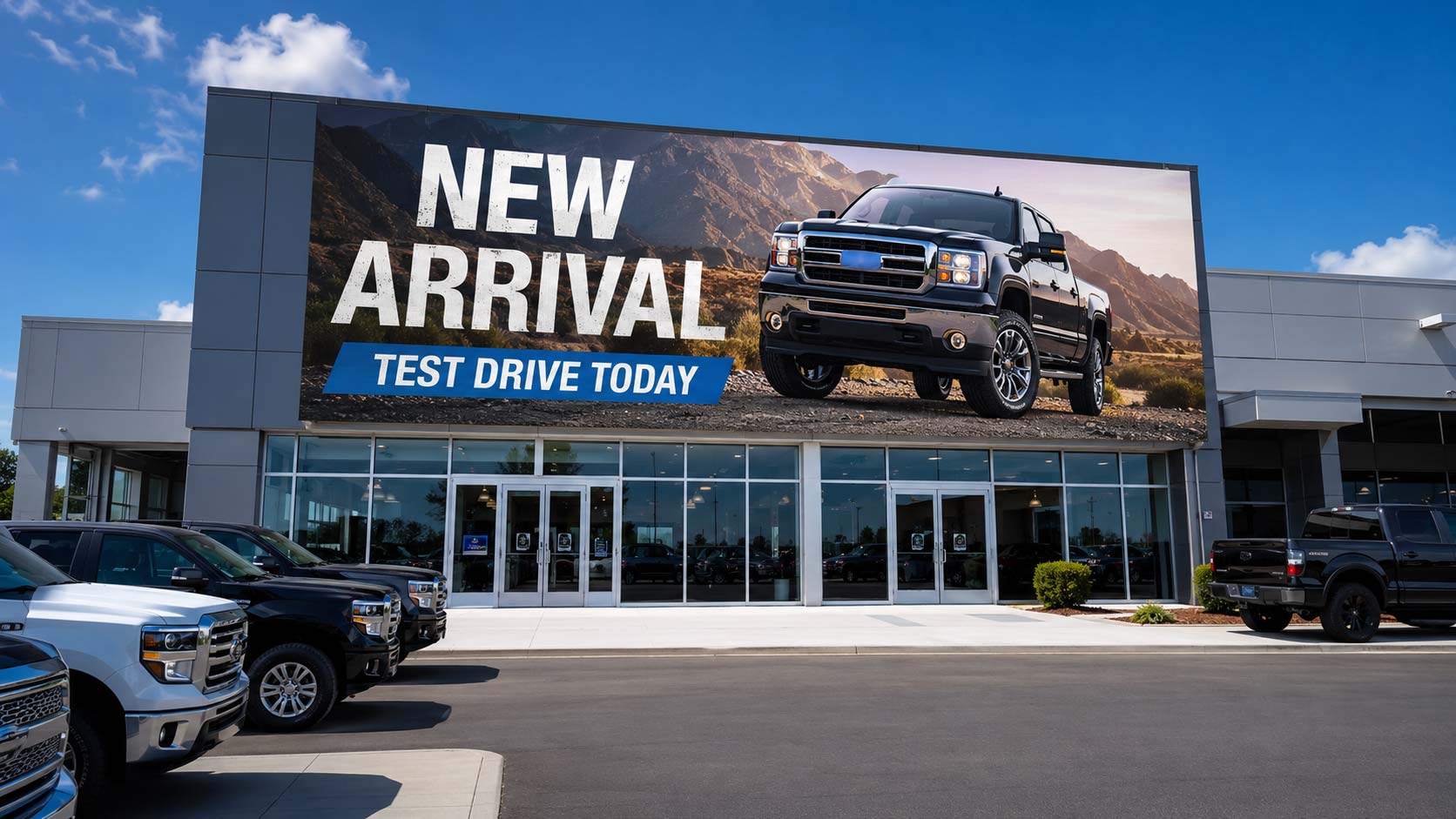
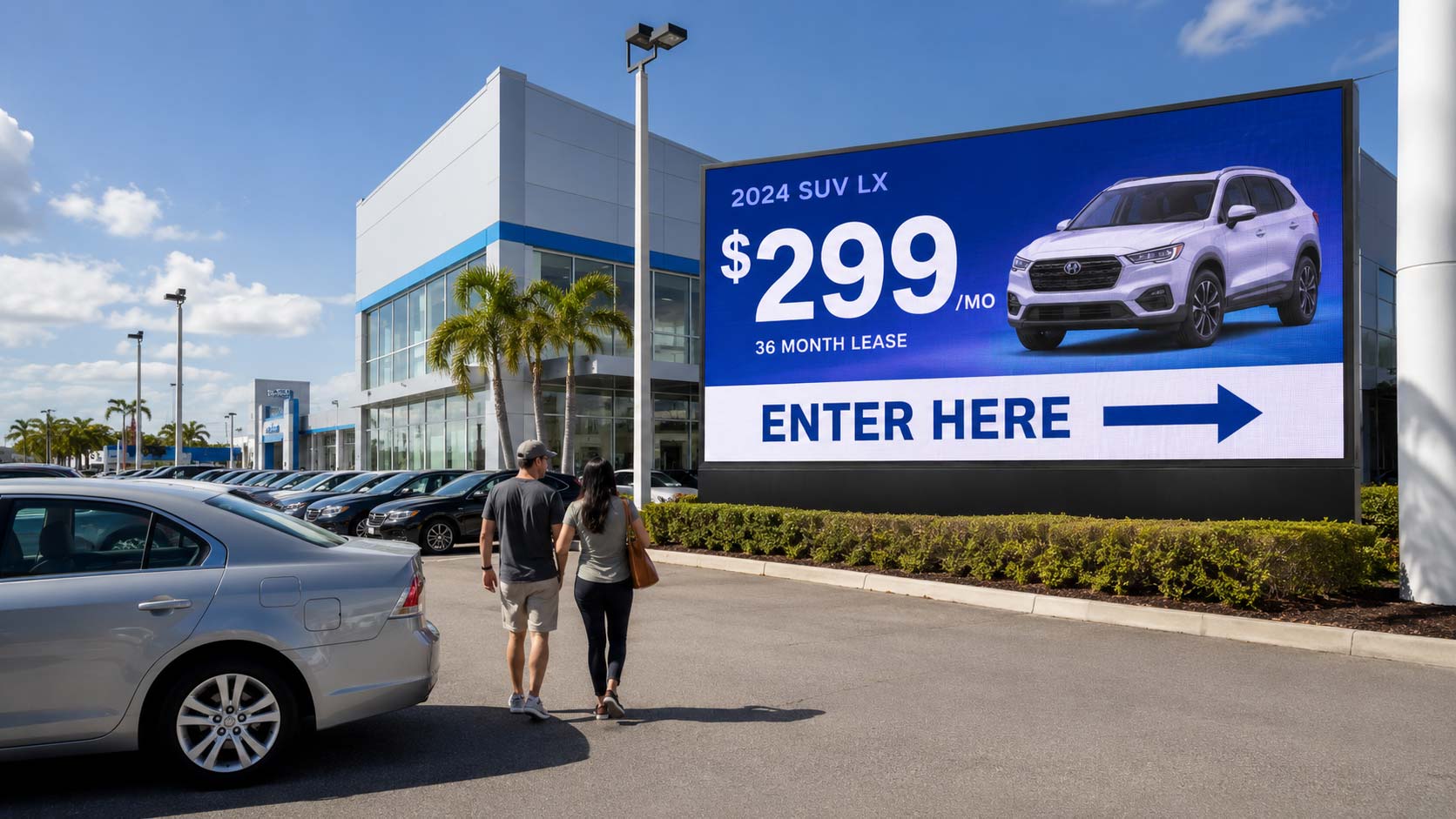
Turning LED Screen Placement Into Inventory Strategy
Even well-built LED walls will underperform if the equipment is poorly positioned. Placement should follow the sightlines, speed, and direction of passing traffic, not simply the most convenient point on the building.
Match the Display to the Buyer’s Path
The best location depends on how potential customers approach the property and where their attention naturally falls. Different layouts may call for different installation methods:
- Ground-mounted display: A freestanding structure near the road or lot entrance can place the message close to a driver’s eye level.
- Wall-mounted display: A prominent facade can provide strong visibility without reducing usable space on the lot.
- Elevated or suspended installation: A higher position can improve long-distance visibility by keeping the content above trees, parked vehicles, or nearby structures.
Size, Distance, and Content Must Work Together
A larger screen does not automatically produce better results. The dimensions, pixel pitch, viewing distance, and content layout must work together to create fast, effortless comprehension.
LED display panels viewed from the road should show high-contrast vehicle imagery, limited text, and large numbers. A driver should be able to understand the model, offer, or call to action at a glance, even from a substantial distance.
Design for Daylight, Weather, and Daily Operation
Outdoor LED panels must operate through sunlight, rain, dust, humidity, and long daily schedules. Choosing equipment with the correct environmental protection is essential for reliable performance.
For fully exposed outdoor installations, an IP65-rated system provides strong protection against dust and water. In covered or semi-protected locations, a lower rating may be appropriate, depending on exposure and local conditions.
The correct specification helps LED panels remain clear, dependable, and easier to maintain throughout the year.
Build an LED Wall Content System That Helps Cars Sell
High-performance LED display panels are only as effective as the content they carry. Every image, video, and offer should support a specific sales or inventory objective, rather than filling the screen with generic branding.
Promote the Right Vehicles at the Right Time
Traffic patterns and buyer profiles change throughout the day. Scheduling content around those patterns can make the campaign more relevant and improve exposure for priority units.
- Promote family vehicles and SUVs during afternoon commuting and school pickup periods.
- Feature aging inventory during the busiest roadside traffic periods.
- Highlight performance or luxury models during evenings and weekends.
- Coordinate seasonal offers with clearance events, holidays, and manufacturer campaigns.
LED walls make it possible to adjust the content schedule without changing the physical installation.
Connect the Screen to the Marketing Stack
A dealership screen should function as part of the broader marketing system, not as an isolated television. Content may come from a dedicated media player, an on-site computer, a cloud-based platform, or a live camera feed.
Video processors and sending cards prepare each source for the correct resolution and format. They also help optimize brightness, color, and contrast for the LED screens in the installation.
Control platforms such as NovaStar can support remote scheduling, brightness adjustments, and system monitoring. Centralized control reduces manual work and helps the dealership respond faster when campaigns change.
Use Content That Moves Viewers Toward Action
Roadside content must be easy to understand in a few seconds. The strongest campaigns use one message, one visual focus, and one clear next step.
A clean vehicle image, the model year, and one prominent figure—such as the monthly payment or interest rate—will usually perform better than a crowded layout. For drivers, a short, memorable URL can point to the vehicle page, while a large QR code can serve pedestrians or passengers in stopped vehicles.
Directional arrows, entrance guidance, test-drive invitations, and countdown messages can also help move viewers from awareness to action. LED displays should make the next step obvious and immediate.
Measure the LED Tech Impact Beyond Impressions
An outdoor display should be evaluated as a measurable business asset, not simply an architectural upgrade. American LED Screens can tailor LED solutions to the dealership’s location, traffic patterns, inventory volume, and campaign goals.
Connect Screen Campaigns With Real Leads
Digital campaigns are easier to track than traditional printed signage when each offer includes a clear attribution method. Dealerships can measure response through:
- QR codes linked to specific vehicle or campaign pages.
- Short URLs created for roadside promotions.
- Dedicated phone numbers assigned to display campaigns.
- Offer codes or phrases customers mention to the sales team.
- Test-drive bookings and vehicle-page visits during campaign periods.
- Showroom traffic changes compared with content schedules.
LED video walls can then be evaluated against real activity rather than estimated impressions alone.
Choosing the Right Outdoor LED Display Partner
A successful project requires more than hardware. The supplier must coordinate visibility, screen size, structural requirements, content control, system configuration, installation, maintenance, and warranty support.
ALS provides scalable LED panels and project guidance designed around the dealership’s sales environment and long-term operating needs. With the right strategy, LED walls can turn the storefront into a responsive marketing channel that supports inventory movement, showroom visits, and consistent sales activity.