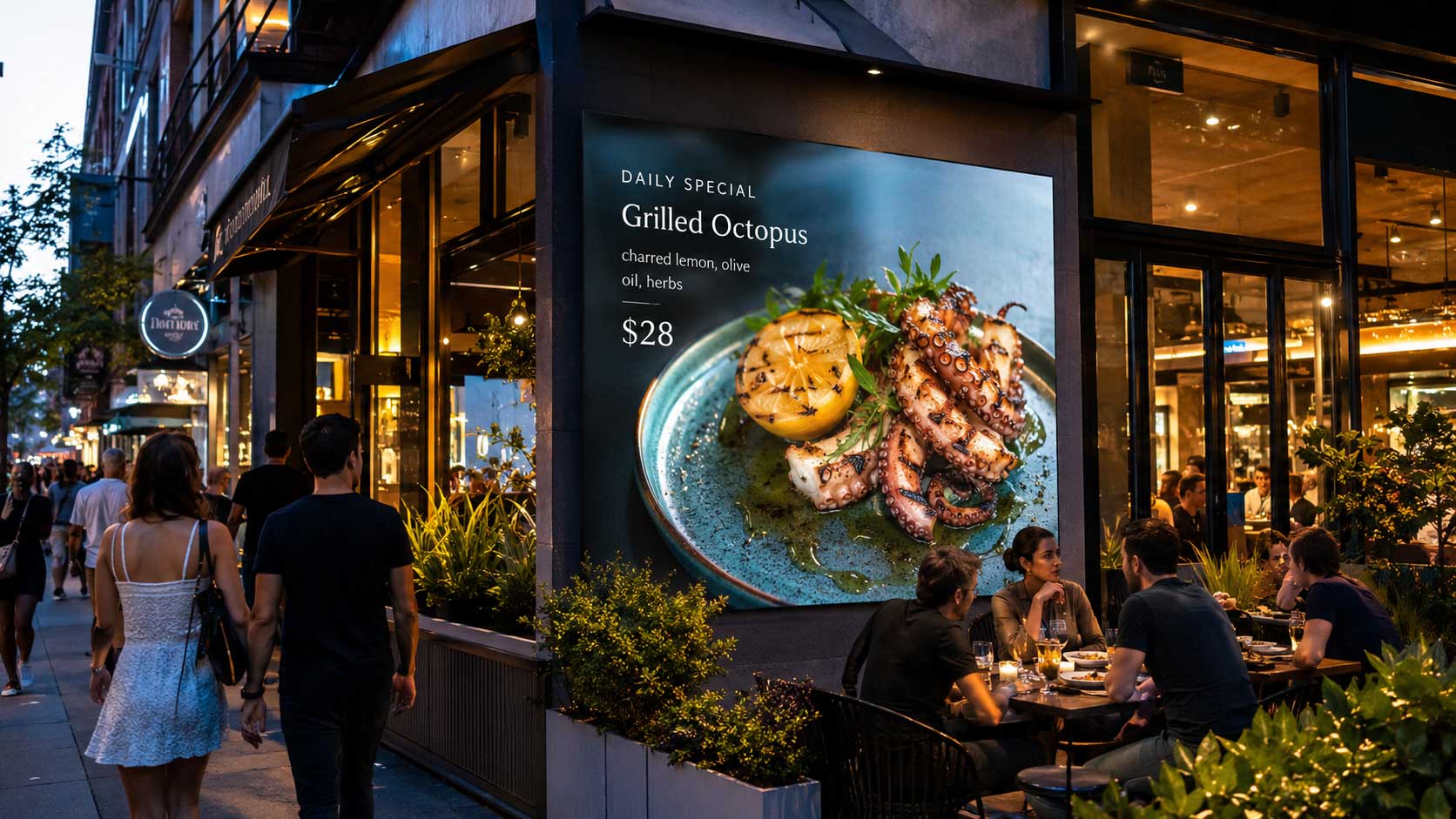
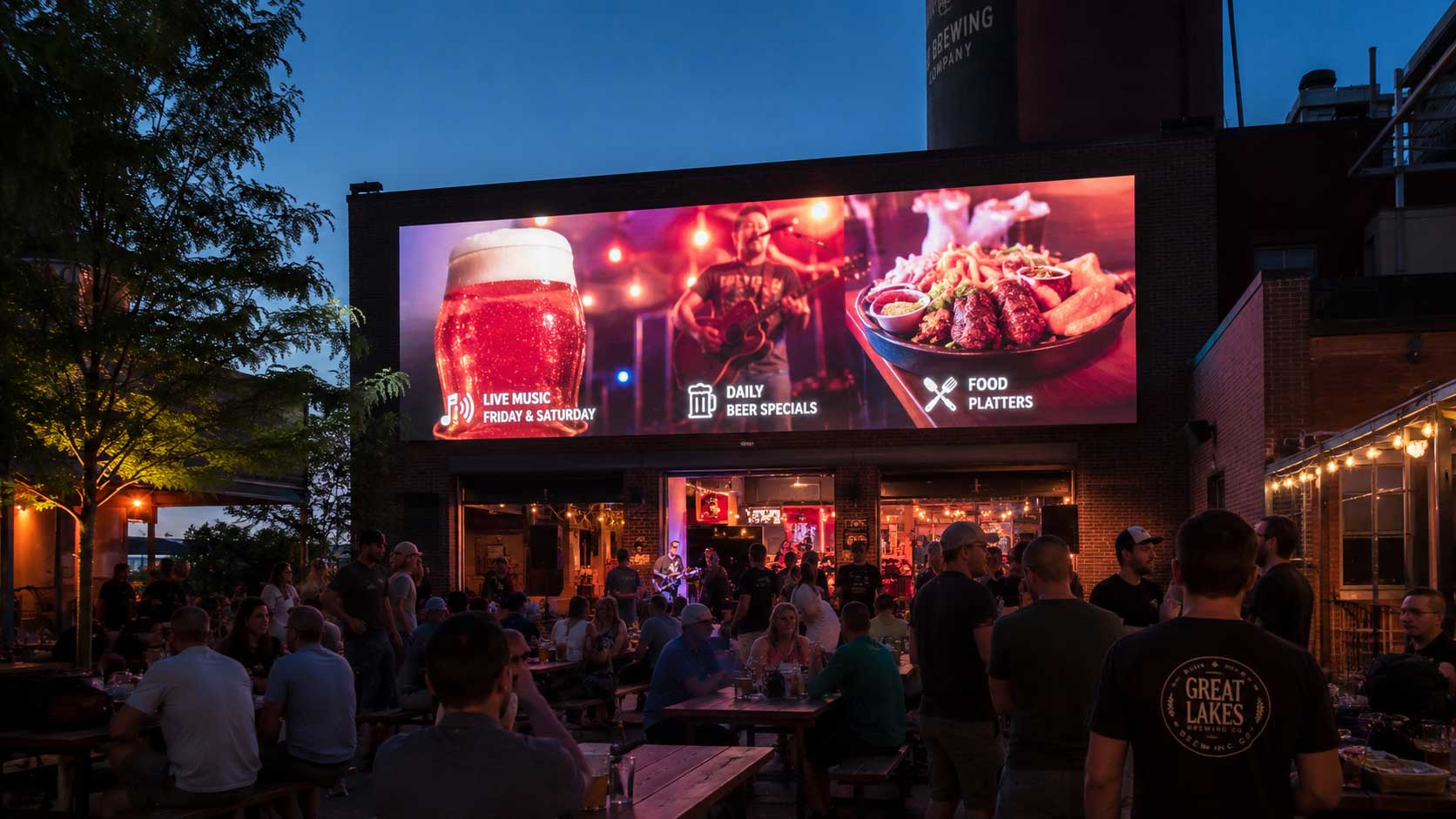
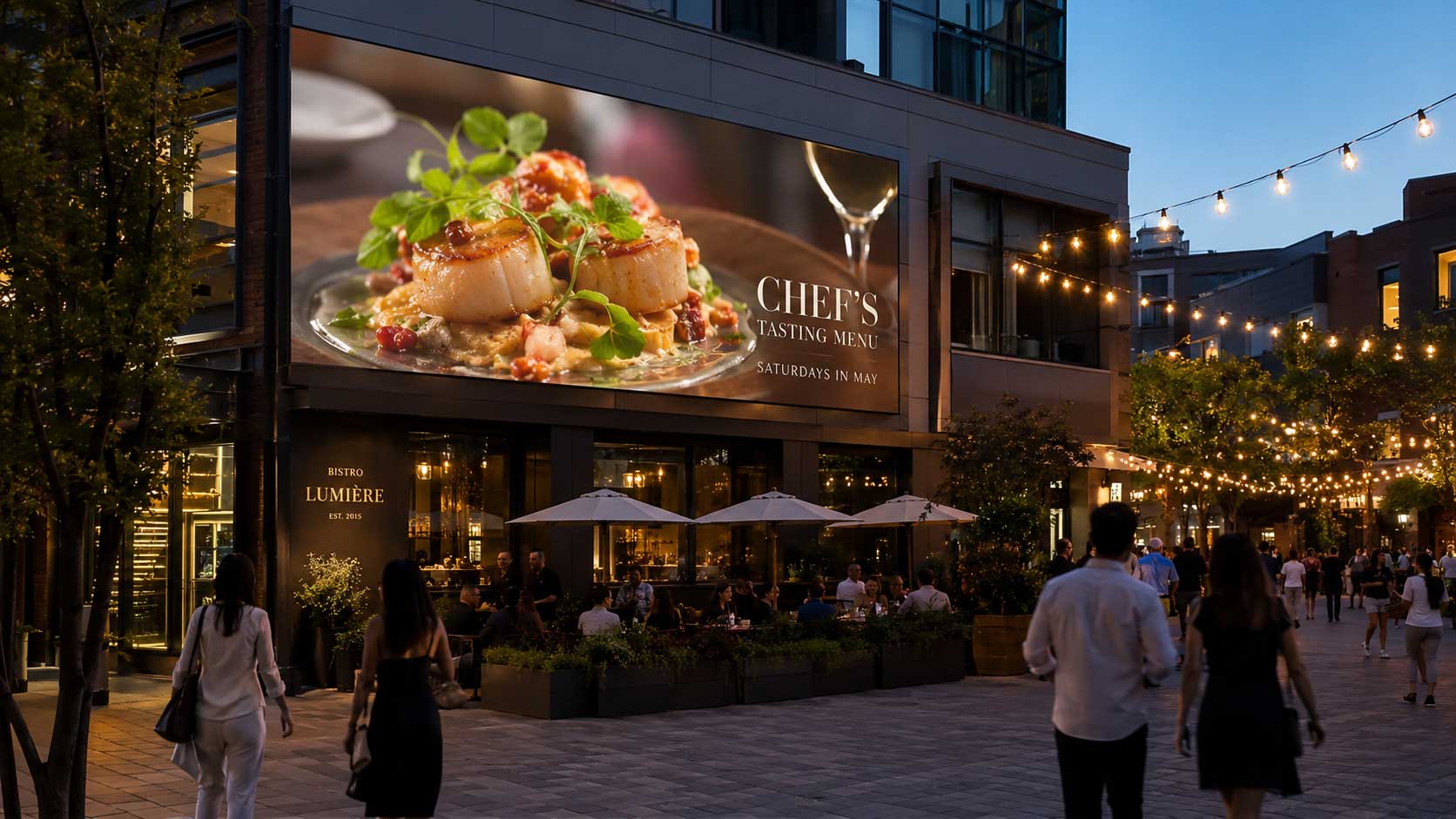
In the food industry, the first opportunity to win a customer often happens before anyone reads a menu or reaches the host stand. It happens on the sidewalk, from the car, or across a busy plaza, when someone decides whether to walk in or keep moving. LED video walls can help restaurants turn that brief moment into real customer attention.
For restaurants, bars, food courts, and outdoor dining areas, LED walls are more than digital signs. They can present daily specials, promote happy hours, support live events, showcase signature dishes, and reinforce the atmosphere of the business. The goal is not to add another screen; it is to make the storefront work harder as a marketing asset.
That only happens when the system is planned correctly. Outdoor LED displays need the right brightness, weather resistance, viewing distance, content strategy, and service access. When those details come together, LED display panels can help turn street visibility into more walk-ins, stronger recall, and a better first impression.
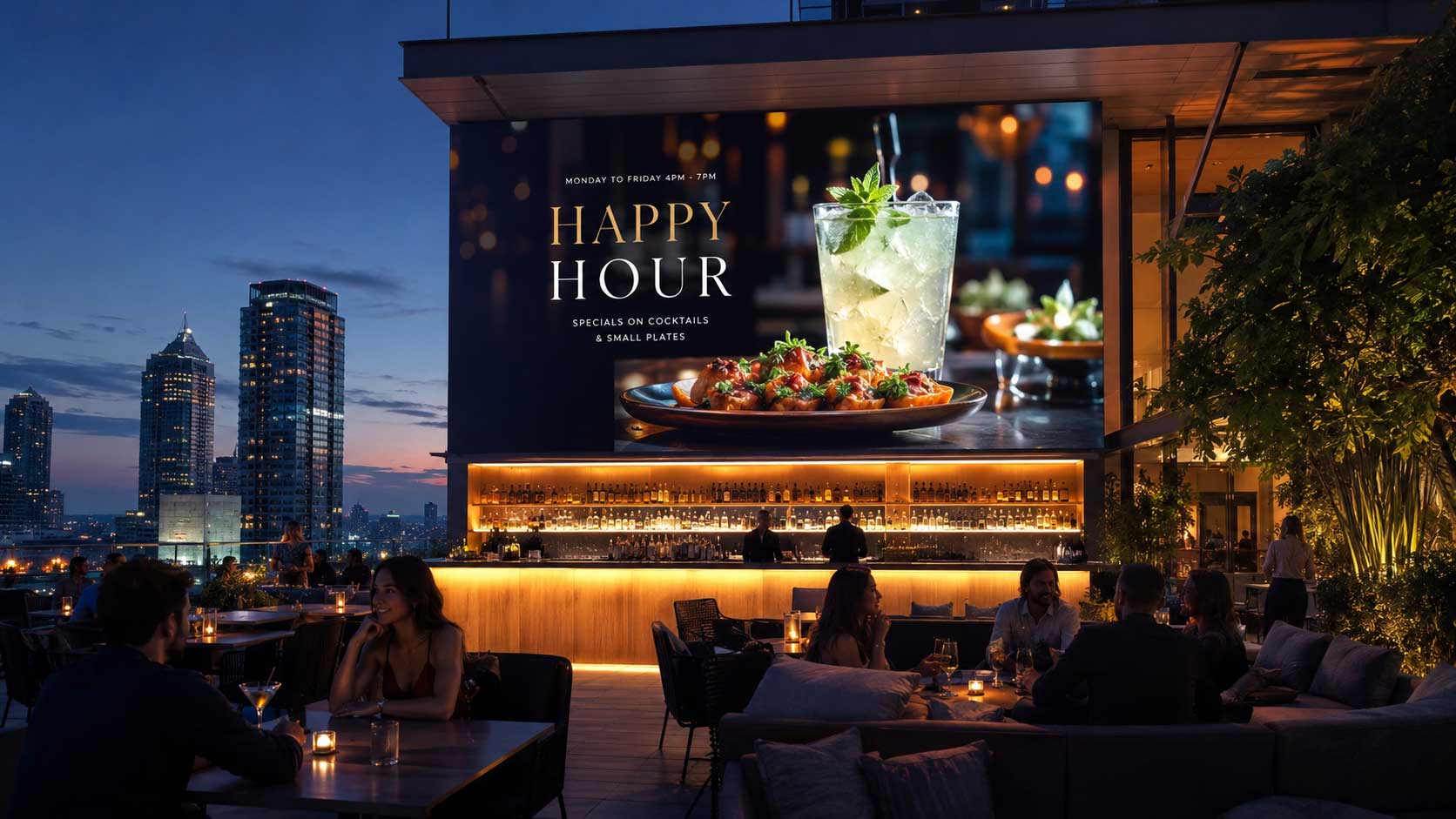
Why Outdoor Visibility Matters for Restaurants
The Street Is Part of the Customer Journey
For many diners, the decision starts outside. They may be walking through a shopping plaza, waiting near a food court, driving past a restaurant row, or comparing options in a busy entertainment district. In that moment, LED screens can give the business a clear visual advantage.
LED panels can show lunch specials, late-night offers, featured dishes, live music nights, sports watch parties, or simple brand visuals that make the restaurant easier to notice. When the message is clear and timely, LED video wall packages can turn a casual glance into a reason to come inside.
Brightness Should Work With the Environment
Outdoor visibility changes throughout the day. Direct sun, cloudy weather, reflections, sunset glare, and nighttime traffic all affect how content appears. A display that looks strong at noon may feel too bright at night if it is not managed correctly.
That is why adaptive brightness matters. LED walls should remain visible in bright conditions while staying comfortable for pedestrians, drivers, and patio guests after dark. The best result is content that feels sharp without feeling harsh.
Digital Menus Can Change With the Moment
A major advantage of LED displays is flexibility. A restaurant does not have to show the same message from opening to closing. Content can change by time of day, audience, season, weather, or event schedule, which keeps the storefront more relevant to the moment.
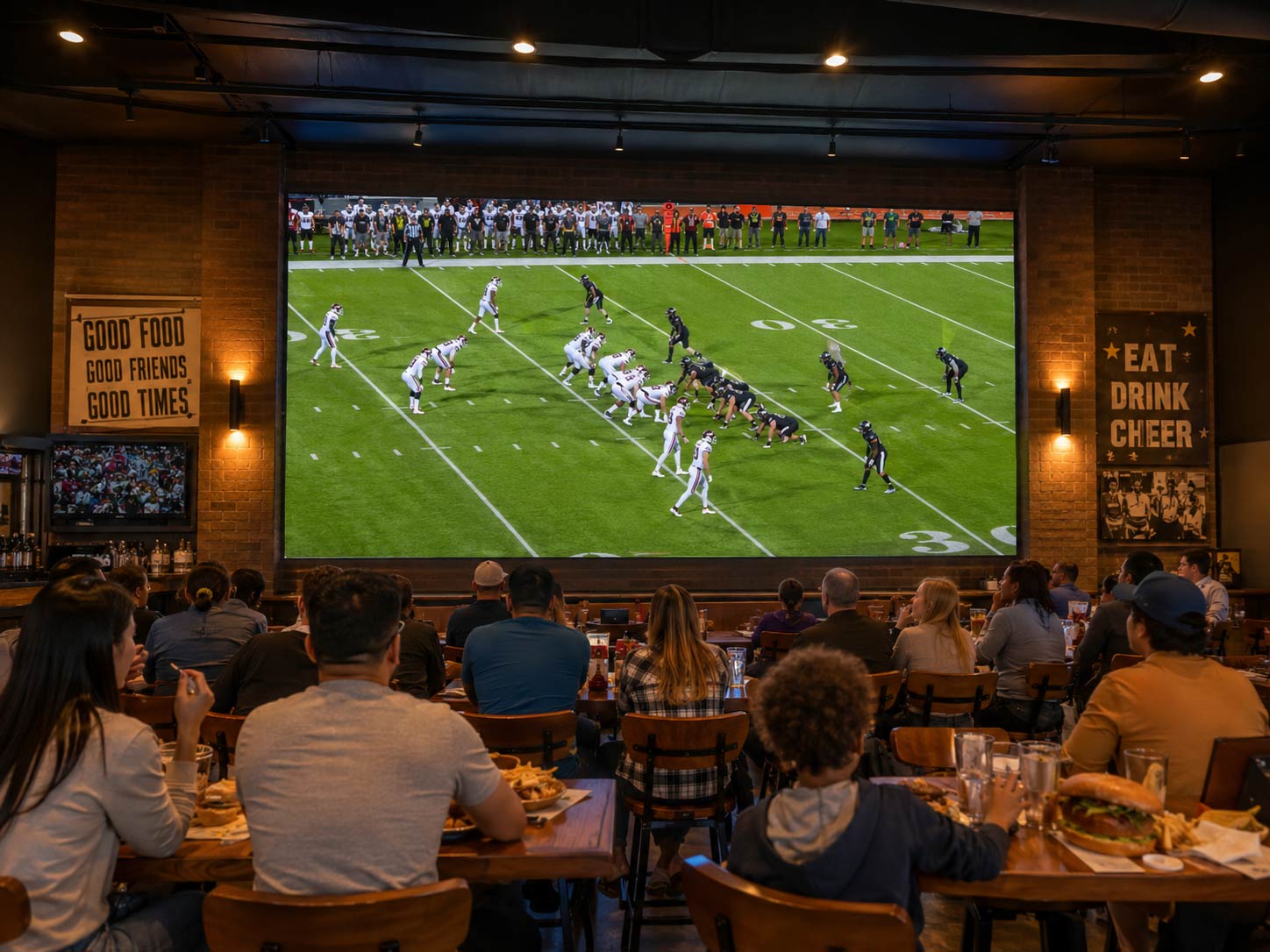
Breakfast items can run in the morning, lunch offers at midday, cocktails in the evening, and game-day promotions before a major match. LED display panels can also promote soups on rainy days, patio seating on warm nights, or seasonal menu items without printing new signage.
Choosing an LED Screen That Can Handle Outdoor Conditions
Weather Resistance Is Not Optional
from outdoor kitchens, and sudden weather changes can all affect performance. Trying to use indoor hardware outside is a risk that usually costs more later.
For this reason, LED screens should be built for exterior use from the start. IP ratings matter because they help indicate protection against dust and water exposure. For many outdoor applications, a front IP65 rating and a protected rear design help LED panels perform reliably in real-world restaurant conditions.
Outdoor Content Needs Clarity, Not Just Size
A large screen may attract attention, but size alone does not make a message effective. Menu items, food photography, pricing, and event graphics must be readable at the actual viewing distance. That depends on pixel pitch, resolution, brightness, and how people move through the space.
A small sidewalk restaurant may need a tighter pixel pitch because people pass close to the display. A patio bar may prioritize viewing angle so customers can see content from different tables. A venue facing a main road may need larger visuals and higher brightness. LED video walls should be selected around the way customers will actually see them.
Refresh Rate Is Relevant for Video and Social Content
Food and hospitality content is highly visual. Melting cheese, cocktail pours, chef clips, animated specials, and social media-style videos all rely on smooth motion. If the movement looks choppy or flickers on camera, the content loses part of its appeal.
A strong refresh rate helps LED displays show video cleanly and reduces visible flicker when guests record the space on their phones. This matters for restaurants that want their storefront, patio, or event setup to look good not only in person, but also on Instagram, TikTok, and customer stories.


LED Wall Installation Should Fit the Restaurant’s Layout
Wall-Mounted Displays for Storefront Impact
Wall-mounted installations work well for street-level restaurants, visible storefronts, shopping plazas, bars, and quick-service locations. They use the building surface efficiently and can turn a plain exterior wall into a more active digital storefront.
When placed correctly, LED display panels can communicate with pedestrians and drivers without taking up valuable floor or patio space. This type of installation is especially useful when the goal is consistent visibility from the street.
Ground Support for Flexible Outdoor Setups
Not every setup needs to be permanent. Ground-supported systems can work well for patios, food festivals, seasonal activations, pop-up markets, food trucks, and special events where flexibility matters.
This method allows LED screens to be positioned based on the event layout, audience flow, or outdoor seating arrangement. For restaurants that change setups throughout the year, ground support offers practical flexibility without committing to one fixed location.
Flown Method for Covered Patios and Event Areas
Restaurants with covered patios, stages, live music areas, private event spaces, or sports viewing zones may benefit from a flown installation. By suspending the display from beams, ceilings, or truss structures, the system stays above the crowd and keeps sightlines open.
This approach can free up floor space for tables, walkways, service areas, or dance floors. In the right setting, LED walls can also give the venue a more professional event-ready feel.
LED Technology Maintenance and Operation Should Be Simple
Restaurants Need Displays That Are Easy to Service
In a restaurant, downtime is expensive. Staff cannot block a dining area, close a patio, or interrupt service every time a system needs attention. LED panels should be easy to access, inspect, and service without creating unnecessary disruption.
Full front service and magnetic modules can be especially helpful in wall-mounted or tight installations. They allow technicians to work from the front of the display and address specific sections more efficiently, which helps keep maintenance faster and less invasive.
Control Systems Keep Content Moving
Behind every clean menu loop, promotional video, or event graphic is a control system keeping the content stable. Video processors, sending cards, media players, and software all need to work together so the image appears clear and consistent.
Reliable control systems help LED display panels show the right content at the right resolution, with fewer signal issues and less staff frustration. For a busy restaurant, the best setup is one that keeps content moving without constant troubleshooting.
Integration Makes the Display More Useful
Outdoor LED displays become more valuable when they can connect with the tools a restaurant already uses. Media players, laptops, digital signage software, audio systems, cameras, and cloud-based platforms can all expand what the system can do.
With the right integration, LED video walls and LED panels can support more than advertising. They can become part of sports nights, live music, private events, seasonal campaigns, product launches, and community activations. That versatility makes the investment more useful throughout the year.
American LED Screens: Your Perfect New Partner
A Strong First Impression Can Bring More Walk-Ins
In competitive restaurant areas, customers often compare several options within seconds. A strong storefront can help one business stand out before the customer has even checked reviews, looked at the menu, or asked for a table.
LED walls can make specials, featured dishes, happy hours, and events more visible from the street. When used with focused content, they help create stronger brand memory and give passersby a clearer reason to stop.
Long-Term Value Depends on Use and Reliability
The return on a display depends on how often it is used and how reliably it performs, which is why LED devices should be chosen for daily commercial use. A system that supports menus, promotions, event content, branding, and seasonal campaigns can deliver more value than a sign with one fixed message.
LED screens should also be supported by dependable service and warranty coverage. For restaurants that rely on daily visibility, a 5-year warranty can provide added confidence that the investment is protected and built for long-term operation.
The Best Outdoor Display Feels Like Part of the Restaurant
The best outdoor display should never feel like an afterthought, and LED walls should be planned with the restaurant’s look in mind. It should fit the architecture, match the atmosphere, support the brand, and communicate clearly without overwhelming the customer experience. Good design makes the technology feel intentional and natural.
American LED Screen’s team provides products and services related to LED video walls, LED display panels, and outdoor restaurant applications. We help businesses choose LED solutions that fit their layout, content needs, service expectations, and long-term goals.
For restaurants, bars, patios, and food courts, LED panels can do much more than add brightness to a facade. With the right planning, LED technology can help attract attention, promote offers, support events, and create a stronger connection between the street and the dining experience.