
When visitors enter a shopping center, they step into a busy environment filled with storefronts, signs, food courts, event announcements, and constant movement. In that setting, attention is hard to earn. Static signage often blends into the background, while LED video walls create a stronger visual presence without interrupting the flow of the space.
Used strategically, these screens help shopping centers communicate with visitors in real time. They can support wayfinding, promote tenant offers, highlight events, and create a more polished atmosphere. The result is better visibility, smoother navigation, and more reasons for people to move toward key areas.
LED Displays Can Shape How People Move Through a Shopping Center
Screens Can Turn Space Into Active Communication
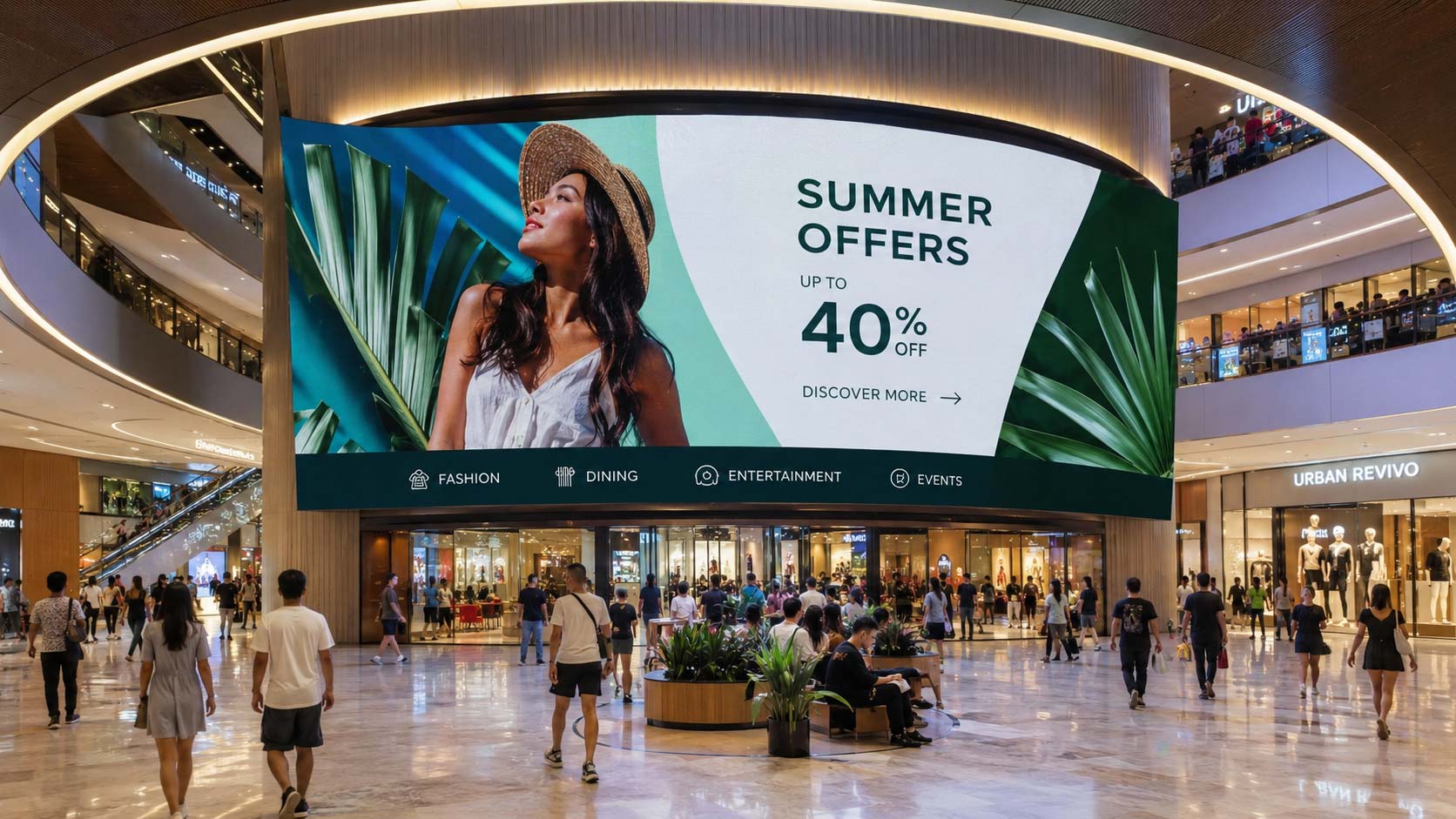
Central plazas, atriums, wide corridors, and transition areas are often underused. Traditional signs can be slow to update and difficult to scale, especially when campaigns change weekly or even daily. LED wall packages turn those spaces into active communication points that can adapt to the retail calendar.
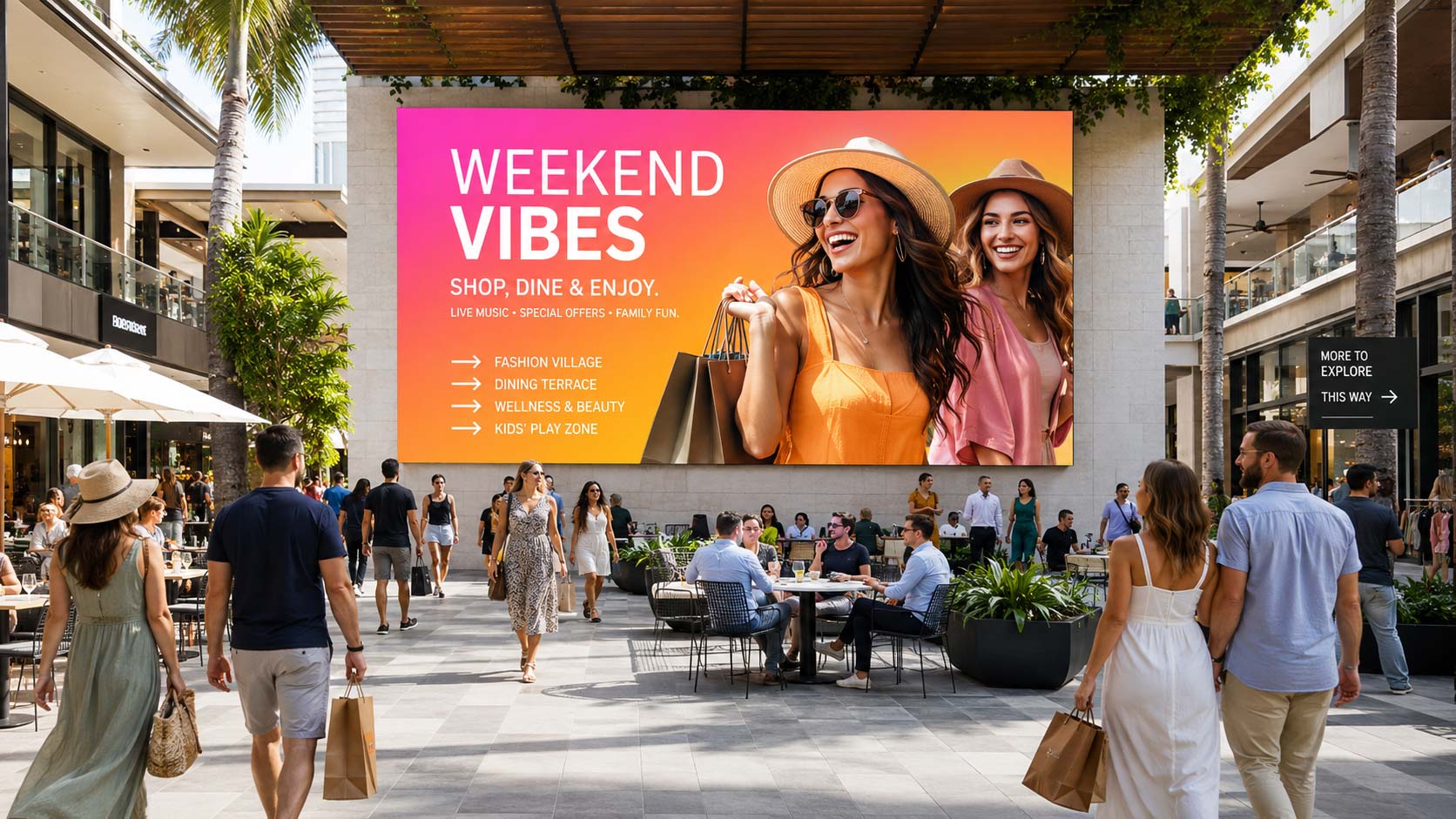
With the right content strategy, LED displays can show directory maps, seasonal promotions, brand takeovers, event reminders, or store announcements without new printed materials. They can also change by time of day, promoting breakfast in the morning, lunch offers at midday, and entertainment or dining options later in the evening.
Visibility From Multiple Angles Increases Value
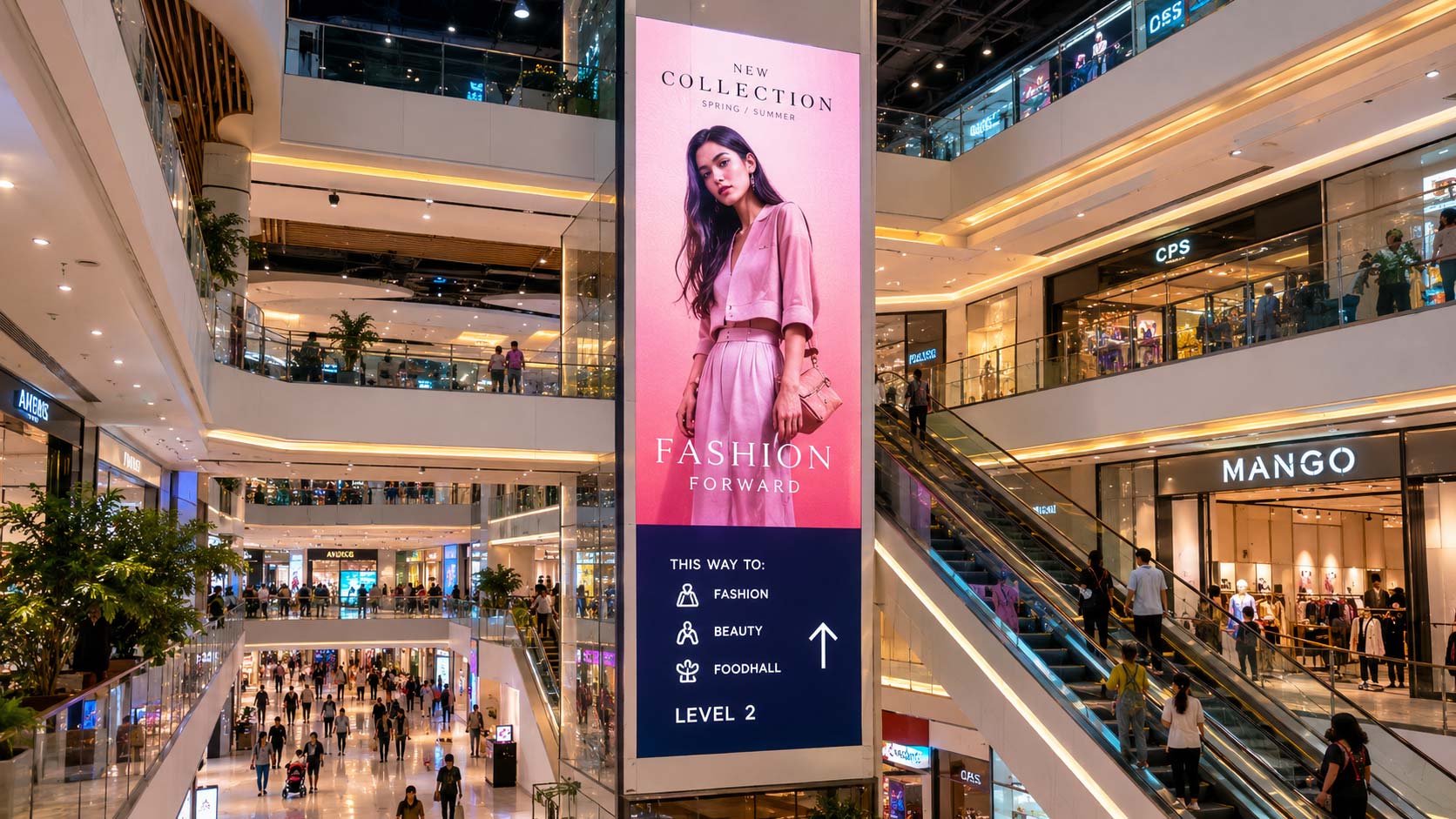
A shopping center is not viewed from one direction. People see content while walking through corridors, riding escalators, entering from parking areas, or sitting in food courts. This makes placement especially important because visibility from several angles increases both impact and advertising value.
Well-positioned LED display panels can generate repeated impressions without feeling intrusive. Hanging cubes, curved installations, double-sided totems, and column-wrapped formats help connect different sightlines and make sponsor or tenant campaigns more valuable across the property.
Brightness Must Adapt Without Overpowering the Space
Shopping centers are challenging lighting environments. Natural light from skylights, reflections from storefront glass, changing indoor lighting, and evening traffic all affect how a screen looks throughout the day. If a display is too dim, it gets lost; if it is too bright, it can feel harsh and distracting.
That is why calibration matters. Professional LED panels should use brightness control that adjusts to the surrounding environment, keeping content crisp during peak daylight and more comfortable at night. The goal is clear visibility without visual fatigue.
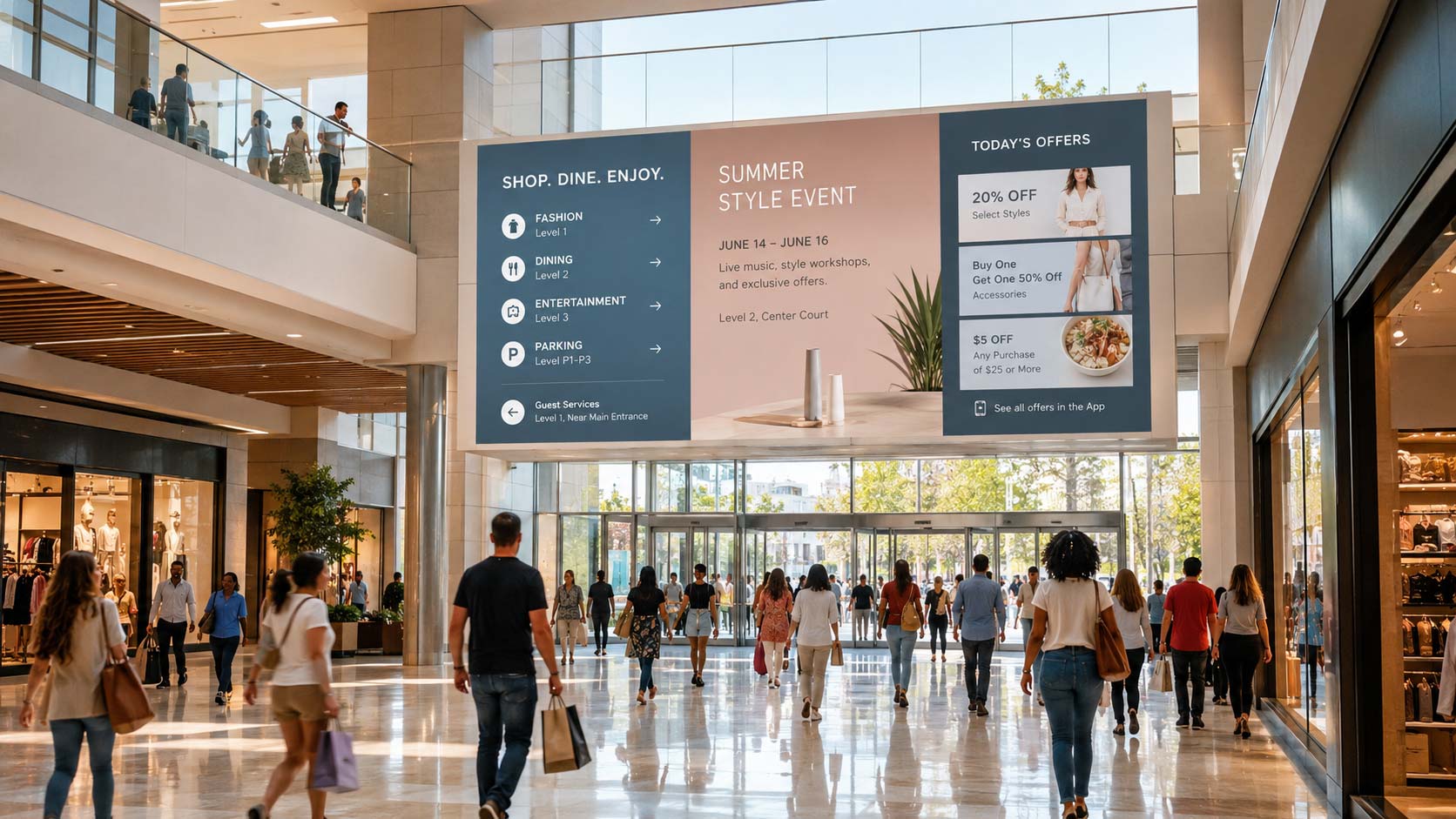
The Right LED Wall Placement Can Influence Foot Traffic
Entrance Displays Set the Tone Immediately
The façade or main entrance lobby is the first opportunity to shape the visitor’s impression. A well-placed entrance display can welcome guests, announce events, promote new store openings, and reinforce the shopping center’s identity from the moment people arrive.
Success depends on more than screen size. The installation must feel integrated into the architecture, not added as an afterthought. LED video walls work well for solid entrance walls or structural columns, where they can be recessed or mounted for a clean, permanent look.
Food Courts and Atriums Need Flexible Content
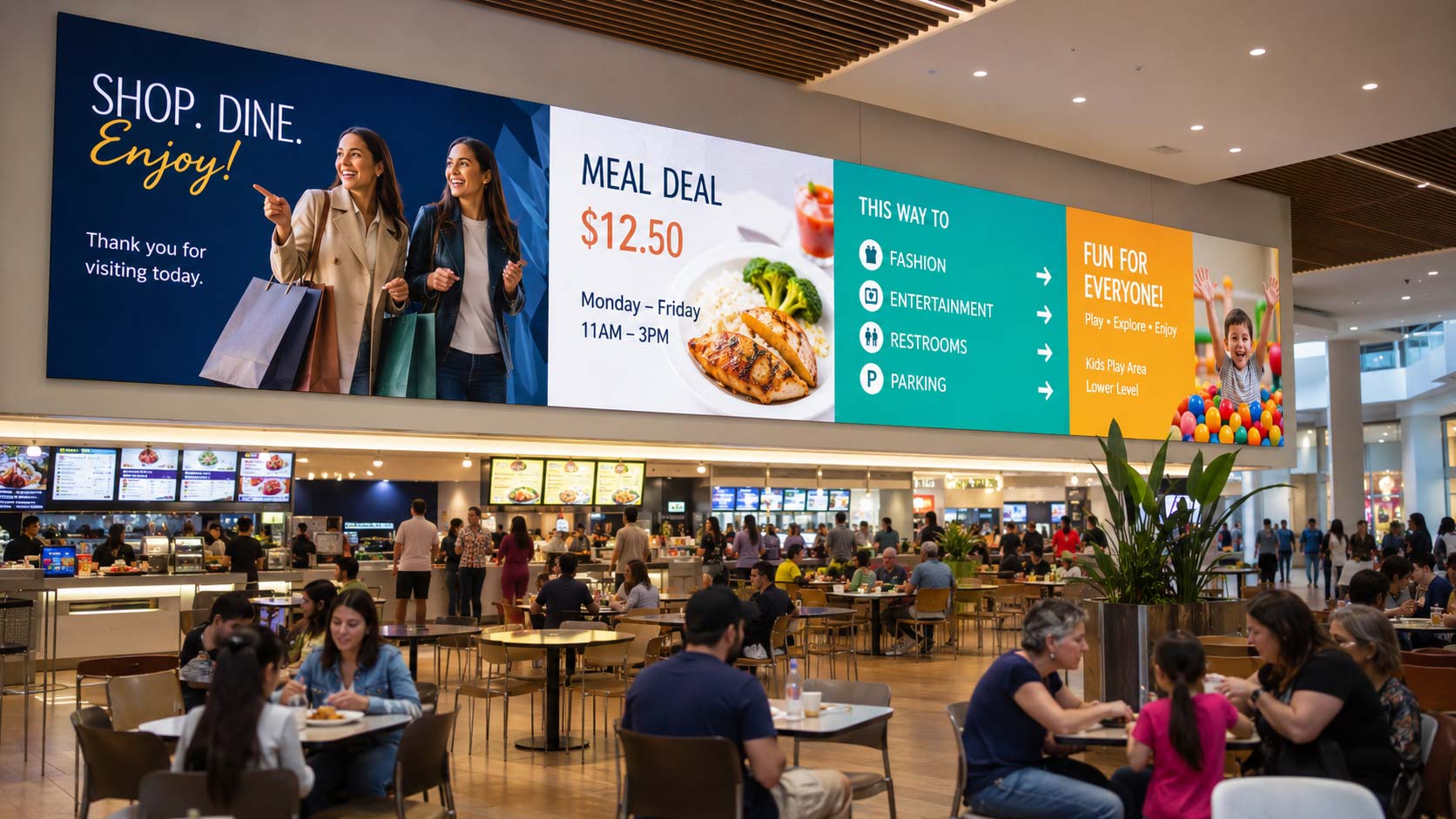
Food courts and atriums are high-value dwell areas. Visitors slow down, sit, wait, eat, and spend more time looking around. Because attention lasts longer in these zones, content needs to stay fresh, useful, and visually engaging.
LED displays can rotate restaurant promotions, live sports, event schedules, sweepstakes, and seasonal campaigns. This keeps the area more entertaining, reduces the perceived wait time, and creates more opportunities for cross-traffic between restaurants, stores, and entertainment areas.
Retail Corridors Benefit From Directional Messaging
Many shopping centers struggle with uneven traffic. Anchor stores, cinemas, and central plazas may stay busy, while side corridors receive less exposure. Smart messaging can help correct that imbalance by guiding visitors toward stores, pop-ups, and promotions they might otherwise miss.
In these corridors, LED display panels do more than advertise. LED walls can support directional messaging, highlight limited-time offers, and make lower-traffic areas feel more active. When a digital signage network helps distribute visitor movement, it becomes a measurable business asset, not just a visual upgrade.
Maintenance, Durability, and Long-Term Operation
High-Traffic Spaces Need Reliable Hardware
A shopping mall is a demanding environment. Displays often run for 12 to 14 hours a day, every day, while dealing with dust, humidity, open entrances, and constant public activity. Reliable LED panels are essential because downtime affects both the visitor experience and advertiser confidence.
For indoor commercial areas such as corridors, atriums, and food courts, an IP45 indoor LED wall rating helps protect against dust and minor splashes. For façades, parking areas, or open entrances, IP65-rated outdoor LED display panels provide stronger protection against rain, dust, and changing weather conditions.
Service Access Should Be Designed From Day One
Maintenance should never be an afterthought. A faulty module in a high-traffic corridor can damage the appearance of the space and reduce the perceived value of the ad placement. At the same time, blocking a walkway with equipment or scaffolding creates friction for visitors and tenants.
Full front service access allows technicians to inspect, remove, and replace modules from the visible side of the screen. With magnetic service tools, individual LED panels can be swapped quickly, reducing downtime and avoiding unnecessary disruption in food courts, corridors, and entrance areas.

Content Systems Make the LED Screen More Than a Display
Control Technology Keeps Multiple Campaigns Organized
Daily shopping center communication involves many moving parts: tenant promotions, directory maps, institutional campaigns, weekend events, seasonal graphics, and emergency alerts. Managing all of that smoothly requires a professional control system behind the content.
A video processor adapts content sources to the exact screen format, especially when the installation is custom and does not follow a standard 16:9 layout. Transmission cards then send the signal to the modules, while the NovaStar ecosystem supports calibration, synchronization, and campaign scheduling across multiple LED screens.
Integration Creates More Uses Over Time
The long-term value of a digital signage network increases when it connects with the shopping center’s broader infrastructure. LED technology should be planned as an adaptable system, not a closed installation with limited uses.
Useful integrations include cloud-based media players, digital signage software, audio systems, event platforms, traffic counters, and machine-vision tools. These connections help management update campaigns, measure audience attention, support live events, and turn LED technology into a practical communication platform.
LED devices can also display parking availability, weather updates, event countdowns, traffic information, or public safety notices. When content is useful, visitors pay more attention, and the system becomes part of the property’s day-to-day service experience.
American LED Screens: Visibility, Advertising, and Experience
Digitizing a shopping center is not just an aesthetic upgrade. When planned correctly, LED video walls create new advertising inventory, improve tenant visibility, support wayfinding, and help management guide visitor movement with greater precision. American LED Screens can be that perfect ally for your business.
They also strengthen the overall perception of the property. A modern visual network can make a shopping center feel more current, more organized, and more attractive to premium tenants, sponsors, and visitors who expect a polished retail experience.
Our team designs and integrates LED solutions for shopping centers and high-traffic commercial spaces with a focus on architecture, content needs, service access, and long-term operation. The goal is not simply to install hardware, but to create a system that supports visibility, advertising, and visitor engagement.
Operational continuity matters. A flickering, damaged, or poorly calibrated screen in a main aisle can hurt the property’s image and reduce confidence from advertisers and tenants. That is why every project is supported by a 5-year warranty and expert technical support.
With the right planning, a digital display network can protect the investment, reduce unexpected repair concerns, and help management focus on what matters most: creating better experiences, increasing foot traffic, and maximizing the value of every pixel installed.
Get everything you need