

Retail has a funny way of deciding for us. We can walk in “just browsing,” then leave with the exact item we didn’t know we wanted because something caught our eye at the right moment. That’s why modern digital signage keeps moving from “nice to have” to “profit driver.” A 2025 study published on SAGE Journals found that in-store digital signage increased the likelihood of purchasing featured products by 8.1%. When you apply that kind of lift to high-traffic aisles, seasonal endcaps, and checkout zones, the conversation shifts from “Is it worth it?” to “Where do we place it first?”
For retailers, the goal isn’t to plaster the store with noise. It’s to create clean, helpful advertising lines that guide shoppers: what’s new, what’s bundled, what’s trending, and what’s worth grabbing before it’s gone. Done well, LED displays don’t feel like advertising at all, they feel like service. This guide breaks down how LED technology can support merchandising, reduce friction, and drive measurable results, while still looking like a premium part of the store experience.
Why Retail LED Walls Win Attention
Retail is an environment built on motion: carts rolling, people crossing sight lines, lighting shifting from the storefront to the back of the shop. The reason these installations win in that chaos is simple: they stay readable, they stay consistent, and they can change messages instantly, without reprinting anything or swapping out a single poster.
The “in-the-aisle” decision moment
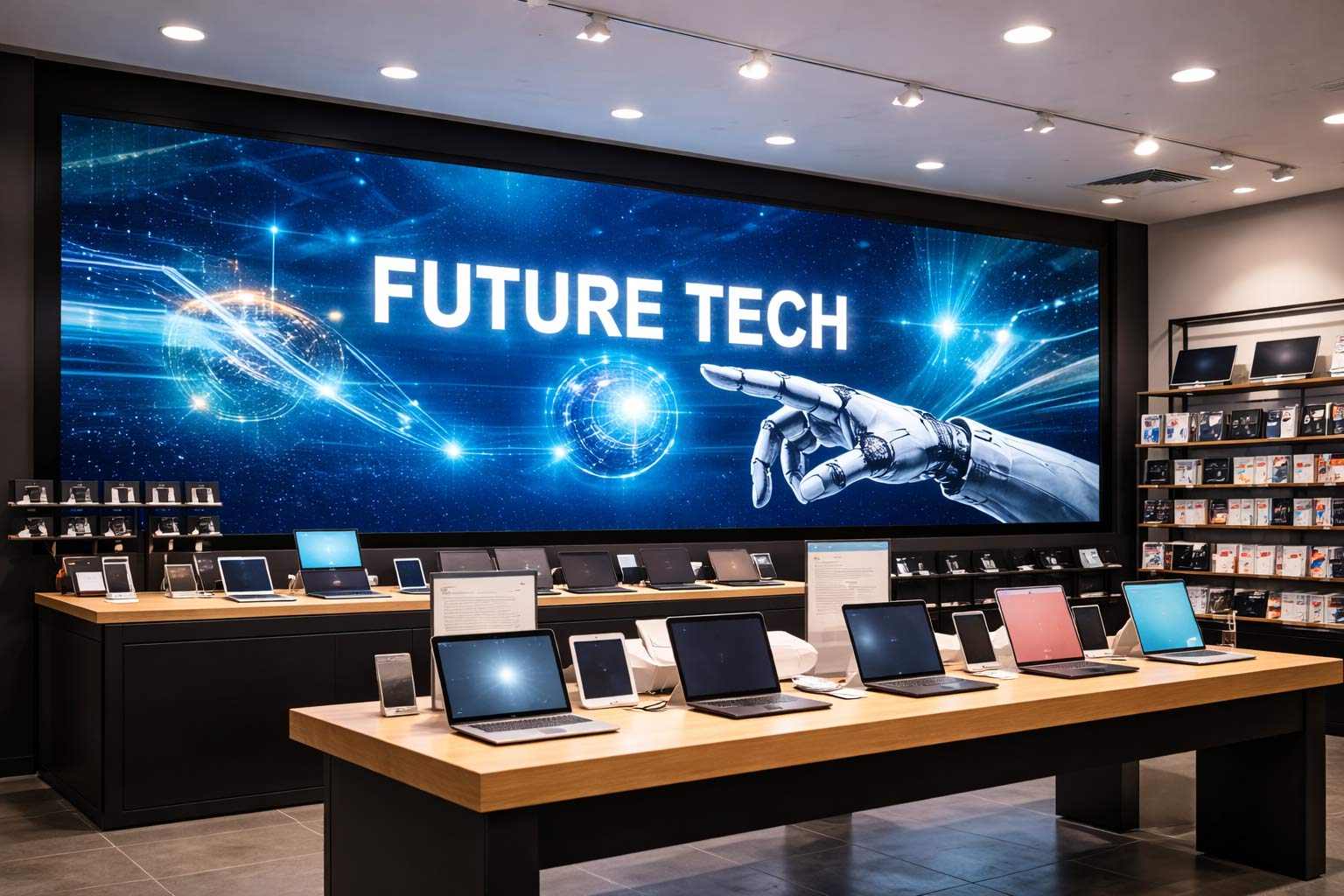
Most buying decisions aren’t made on a couch, they’re made three steps away from the shelf. That’s the moment when LED walls shine: quick comparisons, bundle callouts, limited-time urgency, and “best value” cues that help shoppers decide faster. Instead of asking an associate to explain the difference between two models, customers can see it in a clean visual: features, size, compatibility, or a short demo loop. In practice, LED displays become a silent salesperson that’s always on, always consistent, and never “too busy right now.”
Engagement that feels like service, not advertising
The best retail content isn’t flashy, it’s reassuring. LED display panels can do wayfinding (“Pick up online orders ”), highlight best-sellers, show real customer ratings, or run a 10-second demo that answers the most common questions before they’re asked. That’s where LED panels quietly reduce friction: fewer “Where do I go?” moments, fewer wrong-size purchases, fewer returns caused by misunderstanding.
Behind the scenes, this is where control systems matter. A solid video processor + sending card setup (many retailers standardize on NovaStar ecosystems) lets teams schedule content, manage playlists, and keep branding consistent across multiple locations. With the right software, LED video walls packages can plug into all kinds of inputs, from simple media players to live camera feeds, shared content libraries, and the upgrades you’ll want six months from now.
ROI isn’t just sales
If you only measure retail ROI by revenue, you miss half the story. The real payoff often shows up as speed and consistency. When LED screens explain features clearly, counter staff answer fewer repetitive questions. When LED walls display pickup instructions and queue updates, wait time feels shorter. When LED displays keep promo messaging uniform across stores, managers spend less time “fixing” signage and more time running the business.
That operational ROI matters, especially during peak hours. And it’s one reason LED display panels are now treated like infrastructure: a reliable communication layer that keeps the store running cleanly, not just a tool for pushing promotions.

Where LED Screens Drive the Biggest Retail Impact
Every retail space has “hot zones,” places where eyes naturally land. Planning LED display panels around those zones is usually more profitable than simply choosing the biggest screen.
Storefront & window displays
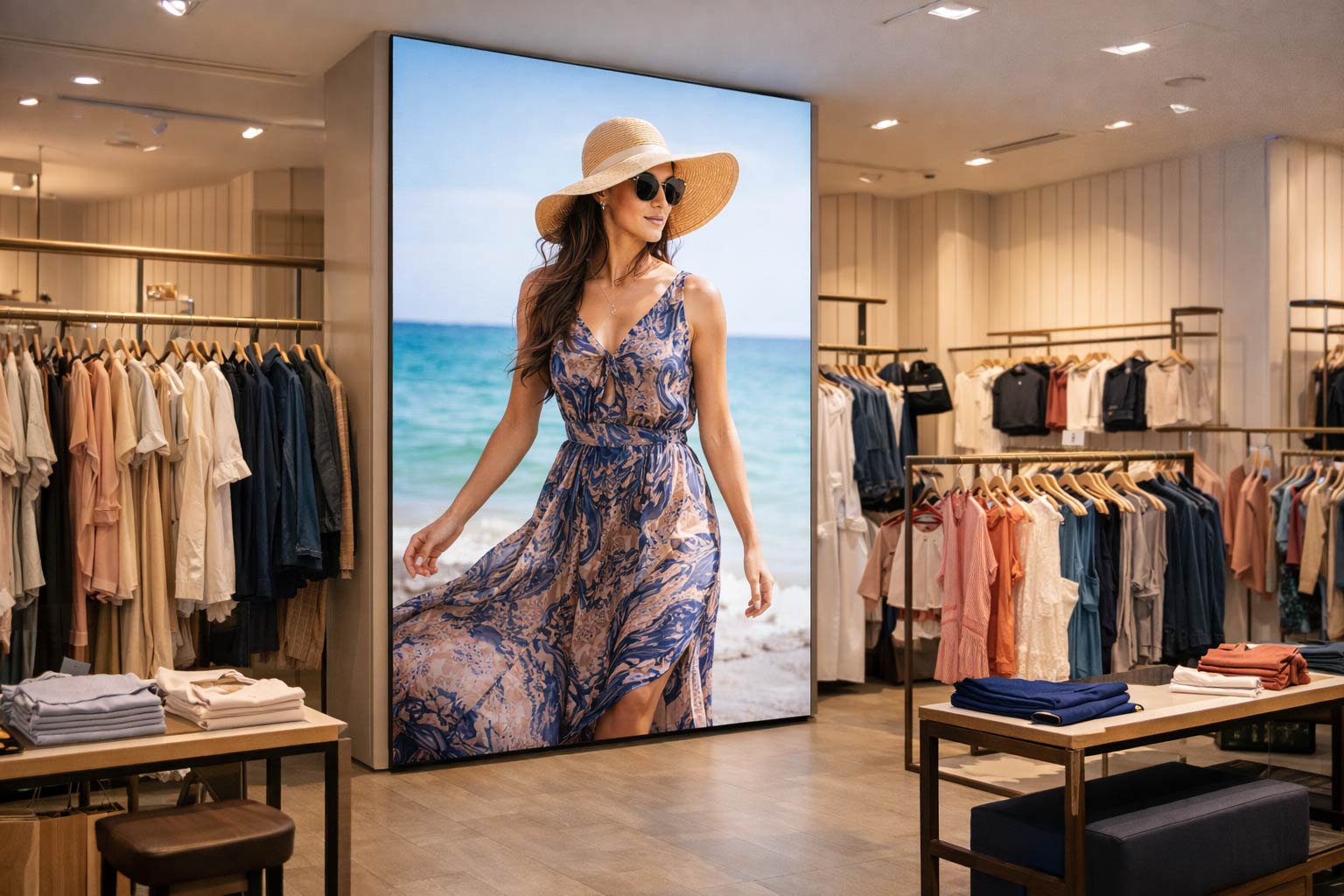
This is your handshake with foot traffic. Window-facing LED panels have to compete with outdoor light and glare. Auto-adjustable brightness helps maintain readability as the sun shifts, while wide viewing angles (often in the 140°–160° range) keep messages clear from different sidewalk approaches. That’s how LED displays turn a walk-by into a walk-in, even when shoppers only catch the message in passing.
Aisles, endcaps, and promo zones
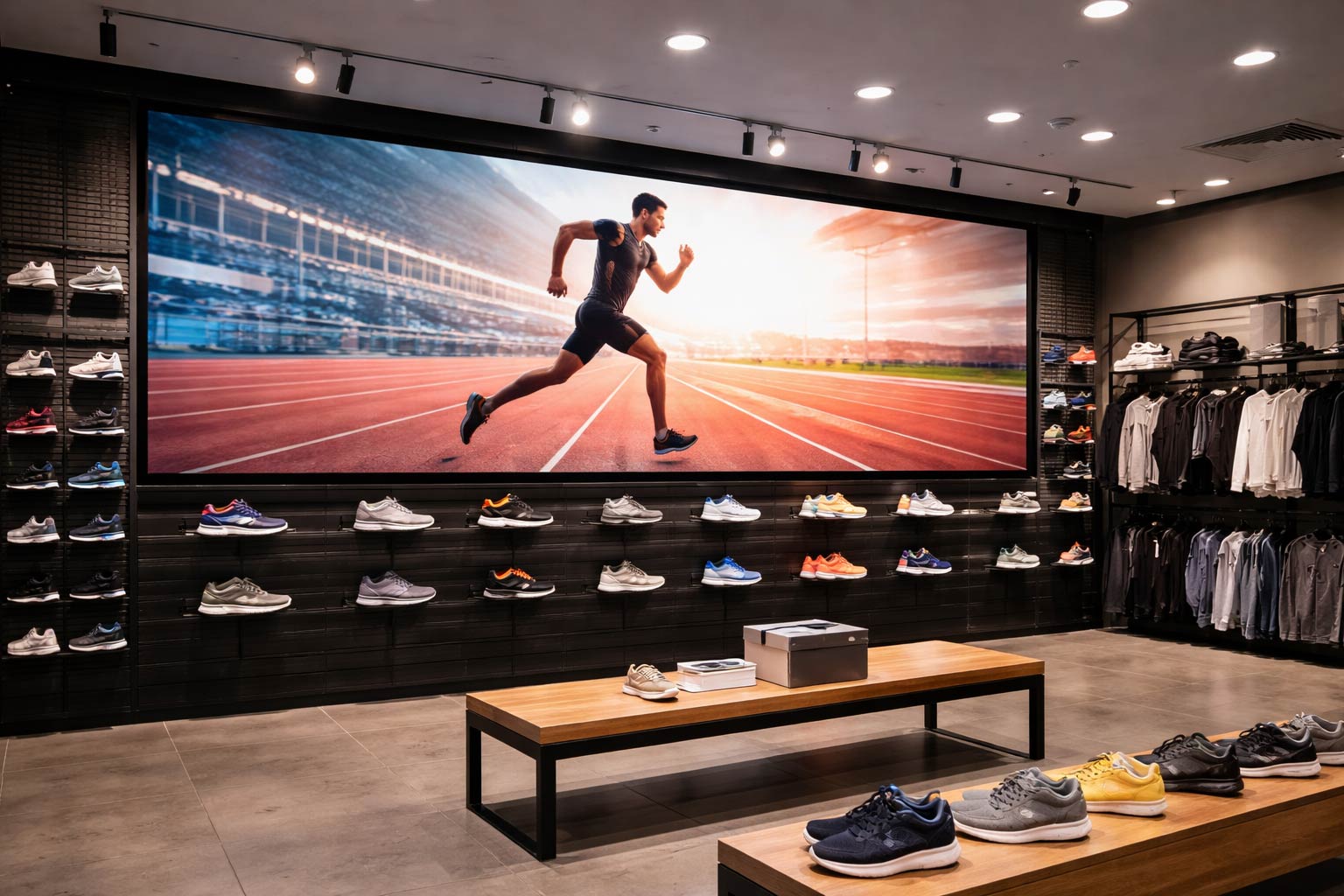
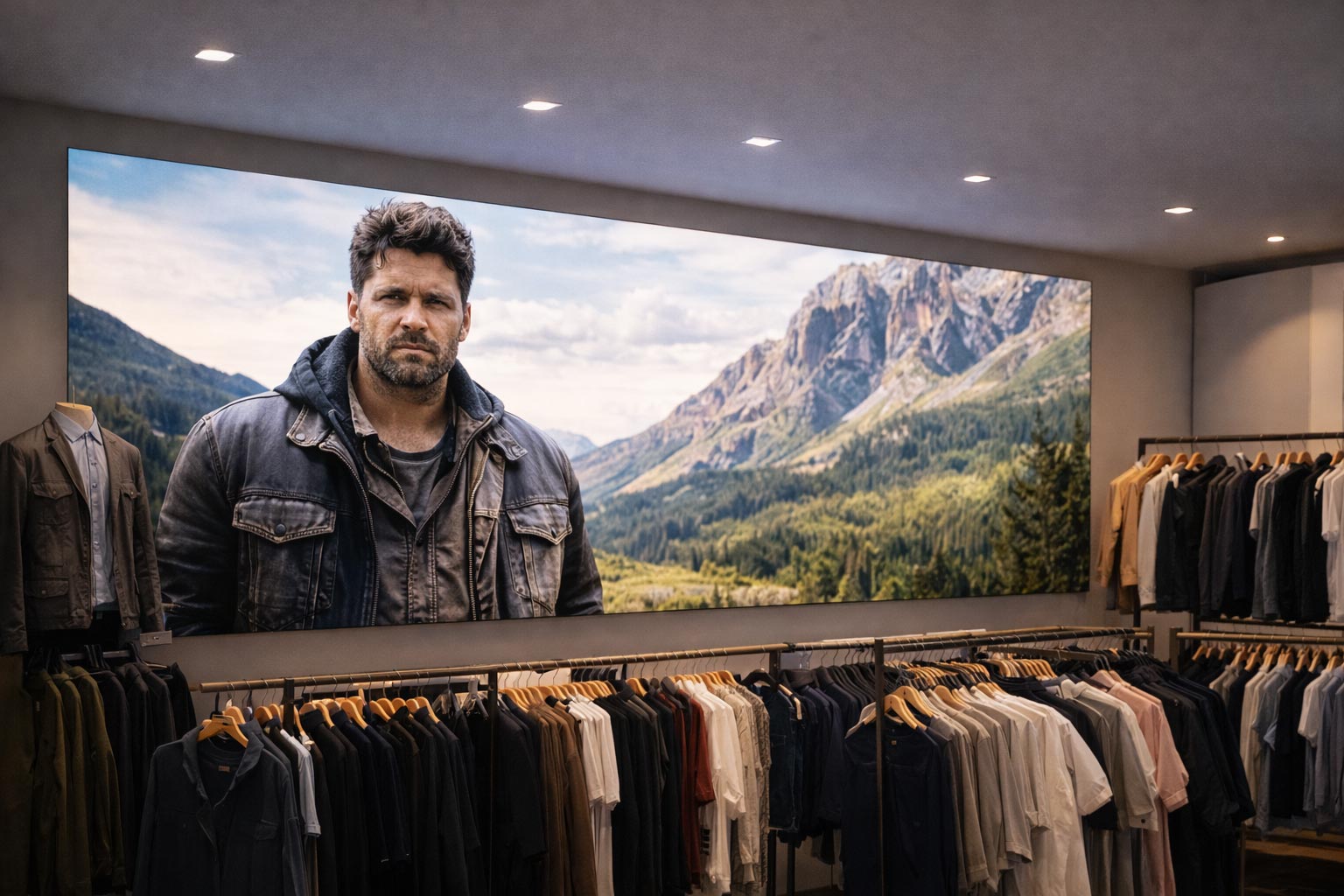
There’s a difference between “brand ambiance” and “immediate purchase.” In aisles, LED walls can spotlight comparisons, limited-time bundles, or quick product education. In promo zones, LED video walls can support storytelling, launching a seasonal campaign or reinforcing brand values. The point is placement: use the screen where the decision happens, not only where the wall space is available.
Checkout, customer service, and pickup areas
This is where content can lower stress. LED screens reduce perceived wait time by giving people something useful to read: pickup steps, return policies, or a simple “what to do next” checklist. It’s also the perfect place to mix asynchronous and synchronous playback. Asynchronous loops handle promos and store messages all day. Synchronous content supports live broadcasts, real-time brand launches, sporting events, or a scheduled announcement tied to a bigger campaign.
Planning the Right LED Panel for your Business
Choosing retail displays is less about chasing “top specs” and more about matching the system to your floor plan and daily realities.
Match the screen to the distance and layout
A display that looks stunning across the store can look messy if shoppers stand a few feet away. That’s where pixel pitch and resolution quietly do their work. Smaller pixel pitch generally looks sharper up close, while larger pixel pitch can be more budget-friendly when the viewing distance is longer. The best LED display panels are the ones that fit your store geometry: aisle width, typical viewing distance, and whether customers will pass close enough to notice fine details.
Make performance invisible
A premium retail feel comes from smooth motion and clean color, not from a spec sheet. Refresh rate plays a big role here. It helps product videos look natural in person, and it prevents distracting flicker when shoppers (or influencers) record content on their phones. When LED video walls are camera-friendly, retailers get a bonus: user-generated content that actually makes the store look good online.
Durability for retail realities: long hours, dust, bumps, and cleaning
Retail isn’t gentle. Carts clip corners. Stock moves fast. Night crews clean aggressively. In some environments, dust and moisture are part of the day (especially near entrances). That’s why durability is more than a buzzword. IP ratings like IP45 or IP65 can add peace of mind, depending on whether the installation is fully indoors or in a semi-exposed area. The result: fewer failures, fewer emergency service calls, and fewer “the display is down again” headaches.
Common Mistakes Retailers Make, and How to Avoid Them
Retail systems work best when they respect human attention, not when they fight it.
Overloading the screen with too much information
If it can’t be understood in 3 to 5 seconds, it’s not suitable for retail. A strong LED display panel doesn’t try to tell the whole story. It highlights one decision: “This is new,” “This is the bundle,” “This is back in stock,” “This is the staff pick.”
Choosing display specs without considering the environment
A display that looks perfect in a warehouse can wash out under storefront glare. A message that feels bright at night can be harsh at noon. That’s why brightness control and viewing angle matter in the real world, and why LED solutions should be specified with actual lighting changes and sight lines in mind. Add in cleaning routines and exposure risk, and IP protection becomes part of the plan. In short, let the store’s traffic patterns choose the priorities, not a generic checklist.
Treating installation/service as an afterthought
Retail teams hate downtime because it’s visible. Service-friendly design reduces that risk. Full front service options mean maintenance can happen without moving fixtures or dismantling walls. Magnetic modules can speed up swaps when something needs replacing, and keeping a couple of spare LED panels on-site can shorten downtime even further. Lightweight cabinets reduce structural demands and make access easier for crews. And installation methods should match the store: ground support for temporary promos, wall-mounted for permanent zones, and flown setups when you want the screen elevated and out of the way.
Turning Screens Into Measurable Retail ROI
Retail LED wins when placement, content, and control work together. The best programs don’t obsess over specs; they obsess over outcomes: smoother shopping, fewer missed messages, and fewer operational slowdowns. Over time, the benefits compound: long lifespan, fewer replacements, less downtime, and more conversions, without constantly babysitting the system. A 5-year warranty helps here, because it turns “what if something fails?” into a manageable plan.
External data supports the opportunity: a Mood Media consumer survey (as covered by Total Retail) found that 58% of shoppers notice in-store digital displays, and nearly half say the displays influence their purchasing decisions. If you’re already spending to get people in the door, it’s hard to ignore a tool that helps convert attention into action.
For retailers who want LED video walls that feel polished, readable,service-friendly, that integrate cleanly, and that hold up to real store conditions, American LED Screens delivers scalable retail deployments backed by practical support and long-term reliability.
Get everything you need