
There’s a significant difference between promotional renderings and real-world performance. LED video walls often look flawless in marketing visuals, yet disappointment can arise once content is displayed live. In most cases, the issue isn’t product quality… It’s installation.
When projects move forward without proper technical guidance or the right equipment, small oversights become visible. The structure may not be perfectly level. Architectural limitations surface unexpectedly. Venue restrictions appear at the last minute. Schedules tighten. Outdoors, heat, dust, and humidity increase the pressure. Indoors, electrical routing and signal distribution must be executed precisely to protect deadlines and investment.
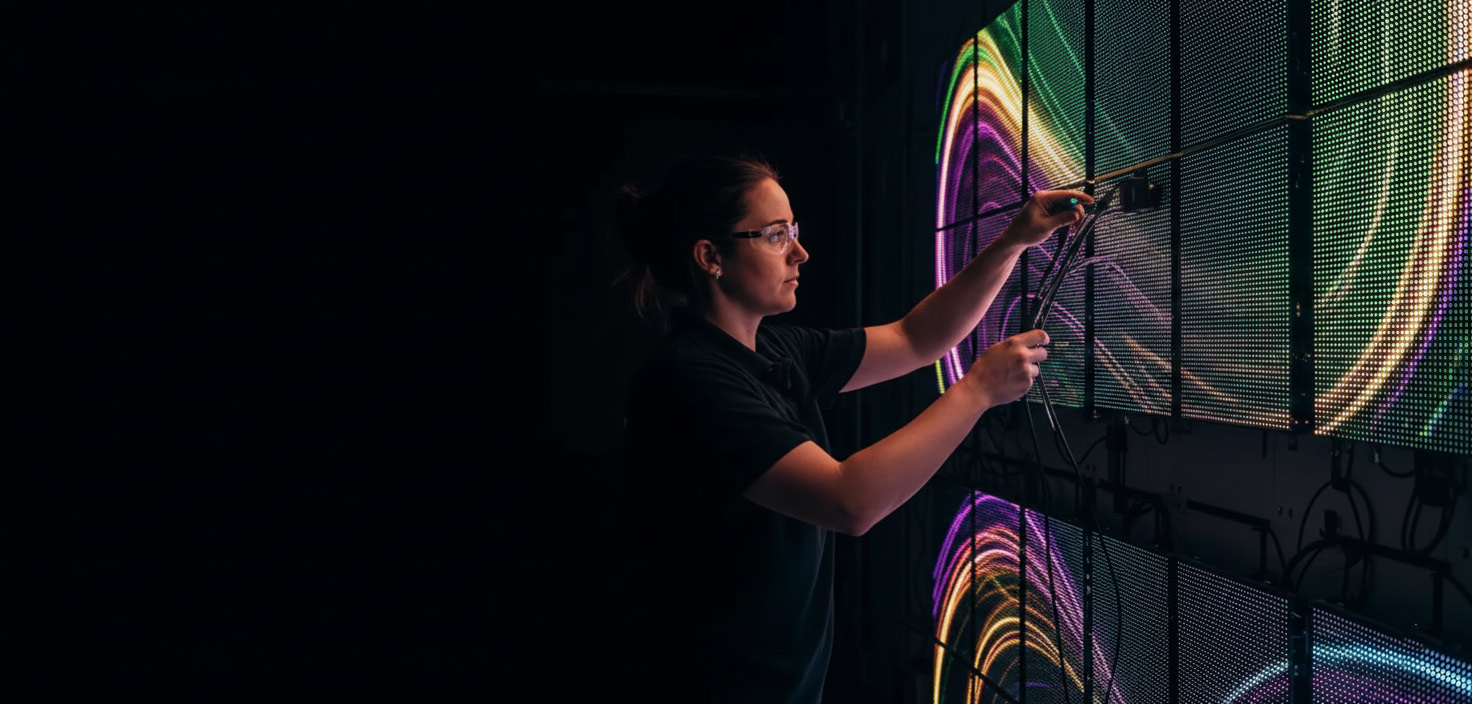
It’s important to understand one fundamental principle: most installation problems don’t originate in the LED display panels themselves. They stem from early decisions that were never fully calculated. Selecting the wrong mounting method, underestimating structural loads, overlooking service access, or improvising power distribution are common causes of failure.
In this article, we break down the most frequent challenges in LED walls, explain how to choose the correct installation method, and outline how to avoid costly mistakes from day one. More importantly, we’ll show why working with a partner who treats installation as part of the design process separates smooth deployments from problematic projects.
Why LED Video Wall Installations Are Crucial
Technology plays a central role in modern communication, but it must adapt to real environments. Unlike many traditional display systems, LED screens offer remarkable flexibility; if they are planned correctly.
The Real Challenge Is the Environment
On-site conditions rarely match showroom perfection. Walls are not always level. Existing metal structures may not support the intended load. Ambient lighting can compromise visibility. Outdoor weather introduces additional variables.
For LED solutions to perform properly, structural assessment, electrical planning, signal routing, and defined maintenance access must happen before the first shipment leaves the warehouse. Successful LED wall installations begin long before assembly.
The Hidden Problem: Clients Underestimate What “Turnkey” Means
Many assume an LED wall functions like a large television: mount it and power it on. In reality, the mounting system fundamentally affects structural load, stability, maintenance access, and installation timelines.
Ground-supported, wall-mounted, and flown systems each require different engineering considerations. In addition, control integration (video processors, sending cards, and software configuration) must be planned from the outset. When added later, hidden costs emerge: structural reinforcements, extended labor, extra installation days, or emergency reconfiguration.
From an ROI perspective, poor planning consumes budget before the system generates value. In LED installations, “turnkey” doesn’t mean plug-and-play. It means complexity has already been resolved.

The 3 Installation Challenges That Cause Most Project Failures
The flexibility of LED video walls is a strength; but without proper translation from concept to structure, that flexibility becomes risk.
Challenge #1: Structural Limitations
A frequent mistake is designing first and calculating later. A large-format LED display may look impressive in a rendering, but without verifying load-bearing capacity, installation becomes complicated quickly.
Ceilings may not support suspended systems. Decorative walls rarely handle additional weight without reinforcement. Switching to flown installations requires verified anchor points and load distribution analysis.
Here, lightweight LED panels offer a measurable advantage. Reduced cabinet weight expands mounting options and lowers the need for costly structural modifications; especially when adjustments must happen late in the process.
Challenge #2: Visibility Problems
Higher resolution alone does not guarantee better results. Visibility depends on viewing distance, audience layout, ambient lighting, and pixel pitch.
LED screens typically offer wide viewing angles between 140° and 160°, maintaining consistent image quality across positions. However, selecting the appropriate pixel pitch is critical. If the pitch is too large, pixel gaps become visible up close. If too small, the investment exceeds practical benefit.
Resolution is not an isolated number. It is the outcome of calculated decisions. Selecting LED display panels based purely on price or specifications (without evaluating actual usage) often leads to dissatisfaction.
Challenge #3: Content + Control Issues
Some installations appear flawless physically but fail operationally. During live events, content lags, scaling mismatches occur, camera flicker appears, or source switching becomes unstable.
Refresh rate plays a critical role in modern LED technology, particularly in broadcast and live streaming environments. Systems exceeding 3840 Hz reduce flicker and ensure camera stability.
Input planning is equally important. HDMI, SDI, media servers, and laptops must integrate seamlessly from the design stage.
Another overlooked decision is choosing between synchronous and asynchronous control systems:
- Synchronous systems operate in real time and are essential for live broadcasts, stadiums, churches, and corporate conferences.
- Asynchronous systems run pre-programmed content from internal controllers, ideal for digital signage and automated advertising.
This decision defines operational complexity, staffing requirements, and future scalability. If ignored early, limitations surface at the worst possible moment; during live performance.
Choosing the Right LED Screen Installation Method
Installation method is not an aesthetic preference. It is a structural and financial decision that impacts long-term stability, maintenance, and scalability.
There is no universal “best” method; only the correct solution for each environment.
Ground Support Installations
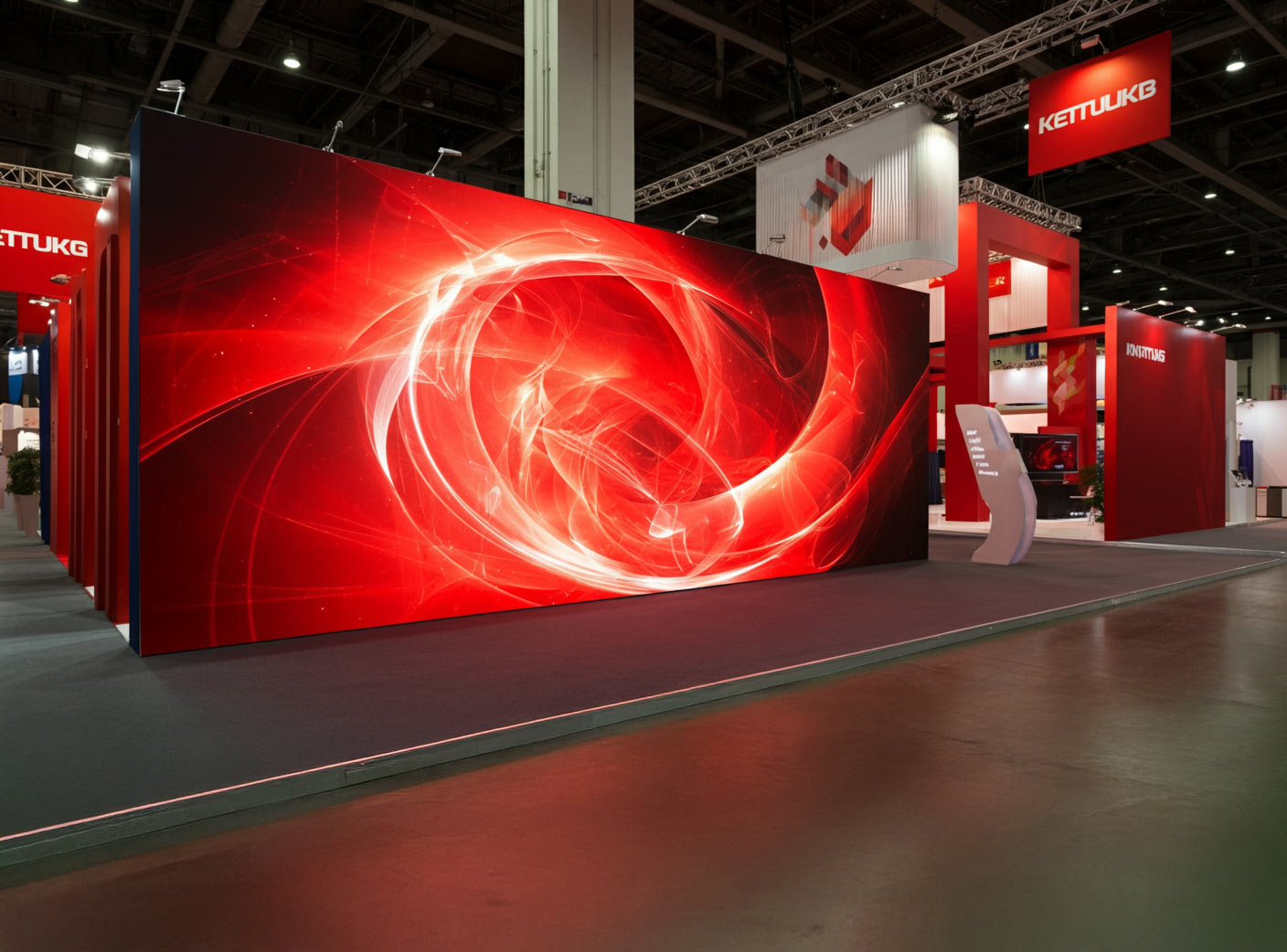
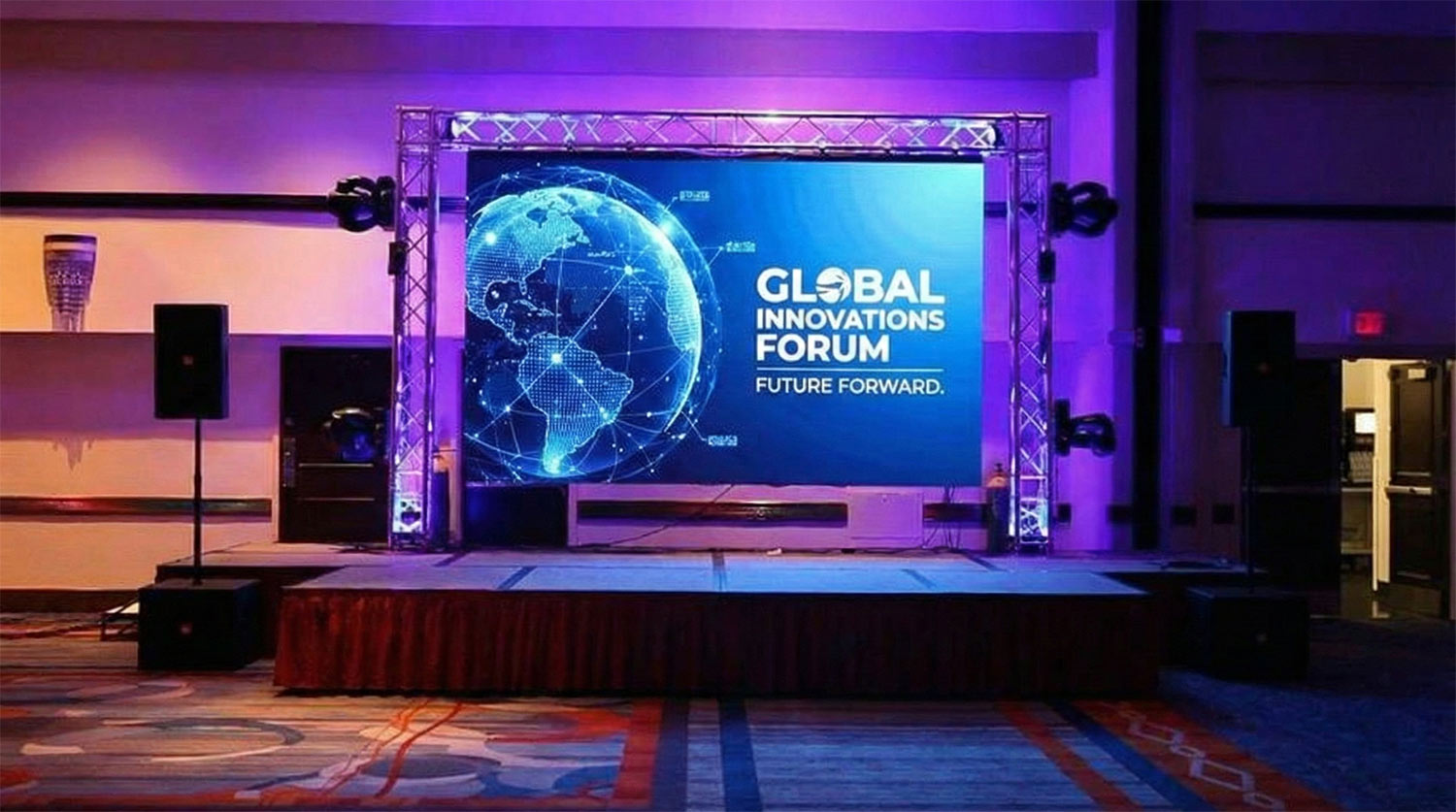
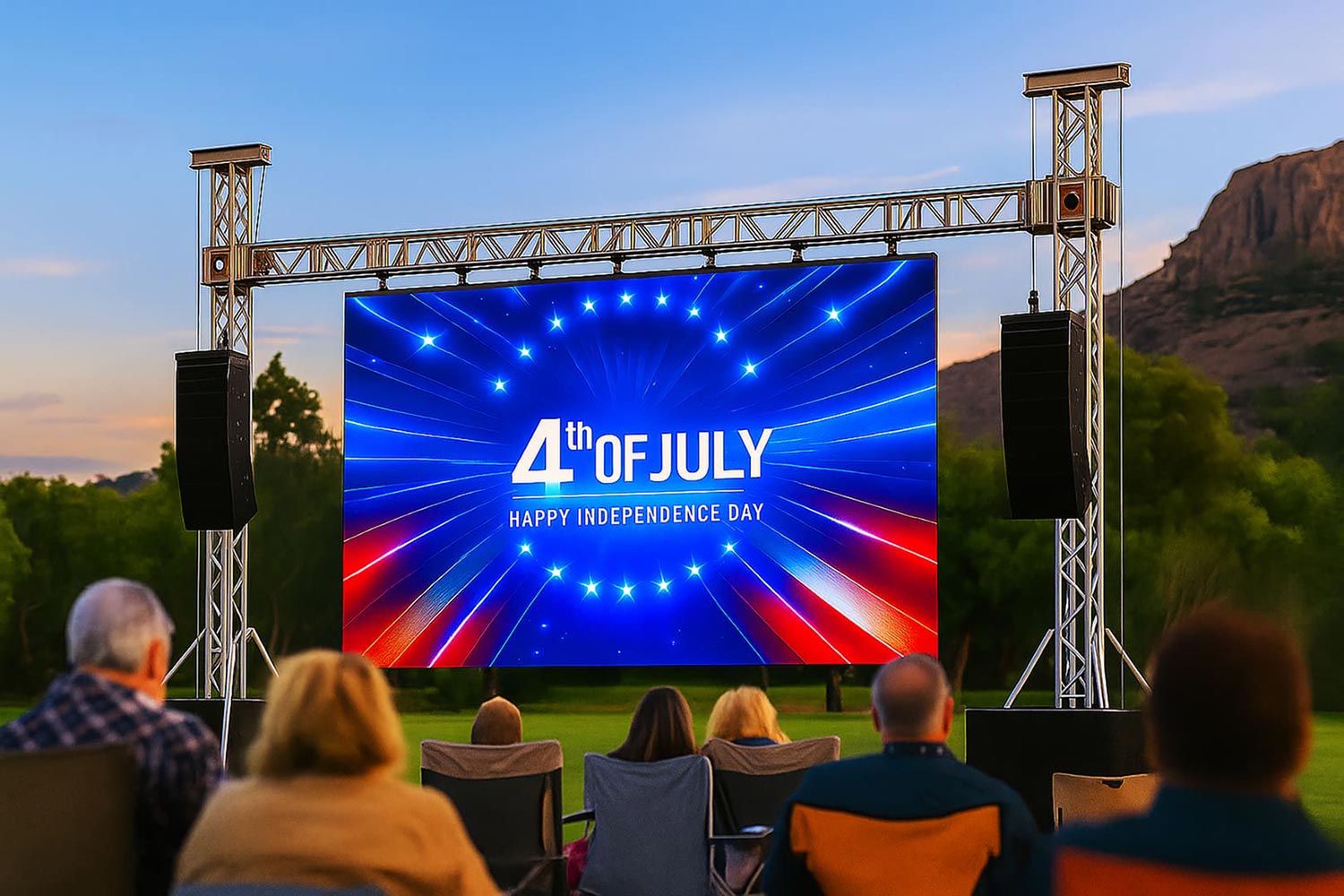
Ground support systems offer flexibility, especially for events, touring productions, churches, and trade shows.
Their advantage lies in independence from building structures. This reduces uncertainty about load-bearing limitations and simplifies access for maintenance. When reused across multiple venues, LED devices installed on ground support become mobile assets with strong ROI potential.
However, stability, leveling, and wind resistance must be carefully engineered… Particularly outdoors.
Wall-Mounted Installations
Wall-mounted LED walls provide clean, permanent integration in corporate lobbies, retail environments, museums, and hospitality spaces.
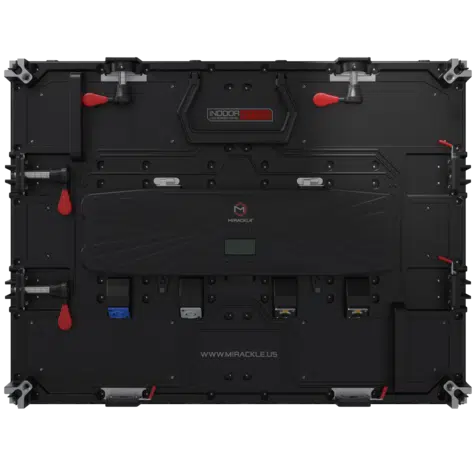
Structural understanding is essential. Metal studs, masonry reinforcement, and load distribution determine feasibility. Front-service LED display panels allow maintenance without rear access, reducing architectural disruption.
Self-adjusting brightness and magnetic modules further improve long-term reliability. Proper planning delivers years of stable operation; poor planning results in repeated intervention and rising costs.
Flown Method Installations
Flown LED screens create maximum visual impact in stadiums, concert venues, and broadcast studios. They also require the highest level of structural certification.
Total system weight, anchor validation, and safety compliance are non-negotiable. For outdoor or semi-outdoor installations, IP65-rated LED panels ensure protection against dust and water exposure.
In live production settings, optical reliability is as critical as safety. High refresh rates and stable signal architecture protect broadcast integrity.
What Makes an LED Panel Installation Easy to Maintain
An installation should not only look impressive; it should remain efficient over time.
Why Front Service Changes Everything for Tight Installs
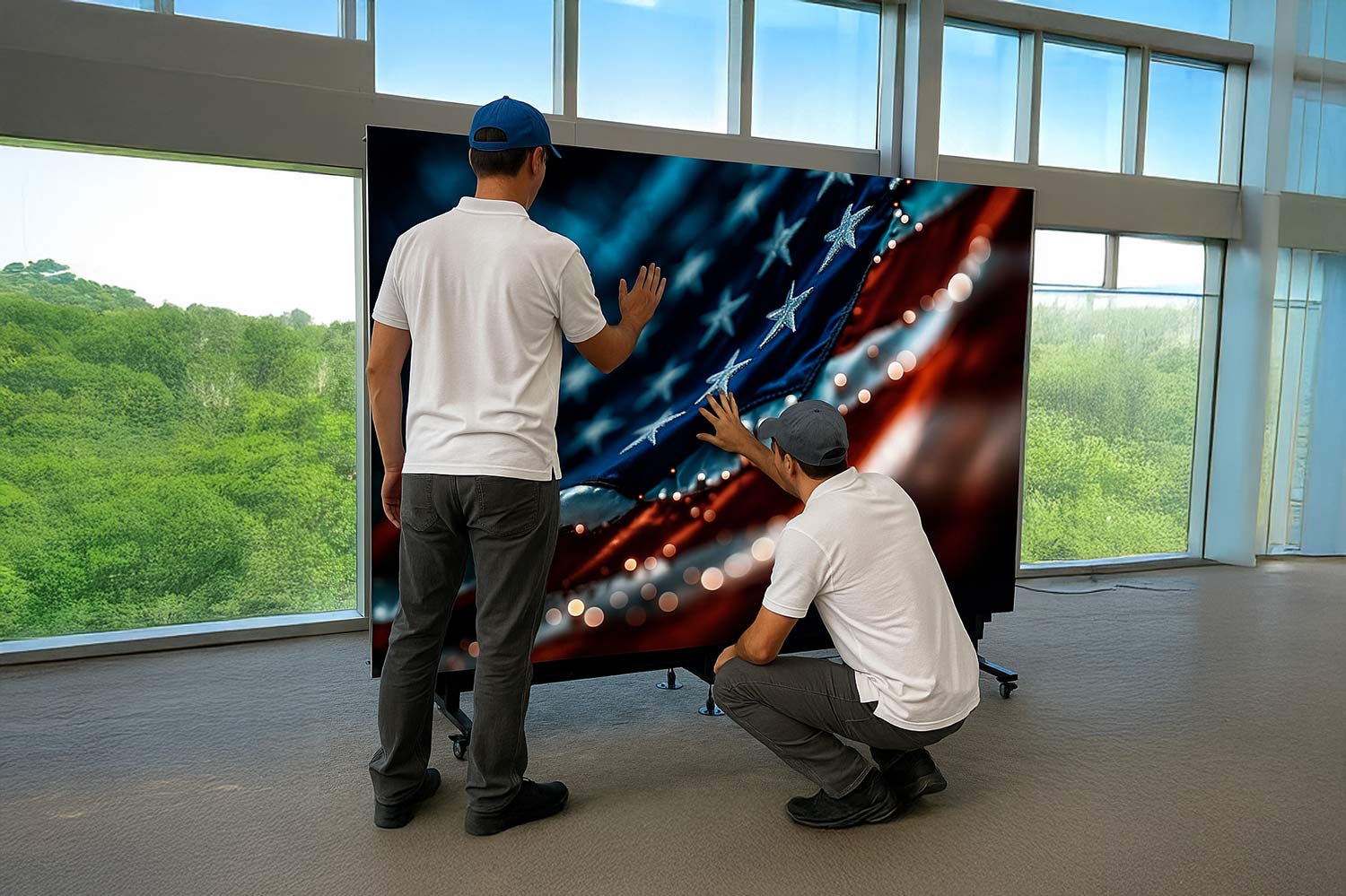
In space-restricted environments, front-service access allows technicians to replace modules directly from the front of the LED video wall. This eliminates structural dismantling and reduces downtime.
Faster service means fewer labor hours and improved operational continuity; key factors in protecting ROI.
Magnetic Modules and Quick Swaps
Magnetic LED panels simplify replacement. Modules can be swapped quickly without complex tools or extended disassembly.
This modular approach reduces maintenance anxiety and prevents “hidden costs.” Well-designed LED wall packages solutions anticipate wear and streamline correction.
Outdoor Durability
For outdoor LED displays, environmental protection is critical. IP65 ratings protect against dust and water in fully exposed settings, while IP45 may suffice in controlled semi-enclosed environments.
Durability extends beyond rain. Thermal management, resistance to temperature variation, and particle protection preserve performance under constant environmental stress.
When LED technology is engineered for endurance, maintenance decreases and investment remains protected.
A Better LED Wall Install Starts With the Right Partner
The initial budget rarely reflects the true cost of an installation. Unplanned reinforcements, extended labor, or system upgrades often emerge later
Return on investment begins at the planning stage.
Choosing the correct control architecture (synchronous or asynchronous) directly impacts long-term operating costs. A live production environment demands robust infrastructure. Automated signage requires efficiency. The right decision prevents premature upgrades.
American LED Screens does more than supply LED display panels. The company evaluates structural conditions, defines the correct installation, method integrates control systems such as NovaStar, and prioritizes maintainability from the design phase.
Every system is backed by a five-year warranty, protecting hardware investment and reducing unexpected expenses. In demanding projects, prevention is more valuable than correction.
Because in professional LED installations, improvisation is always the most expensive option.

Get everything you need