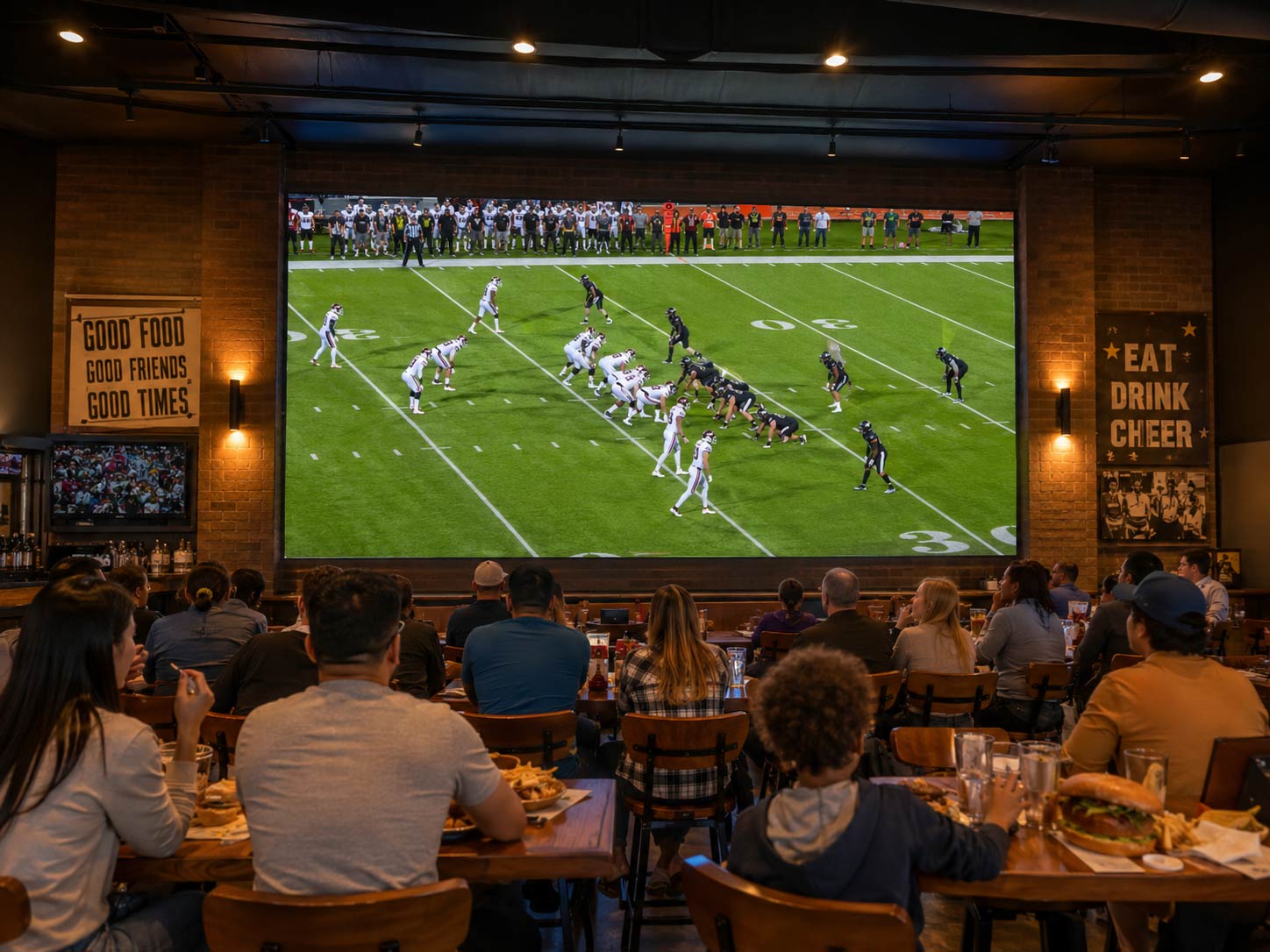
Convention centers are built for constant change. A venue may host a corporate plenary in the morning, a trade show across multiple halls in the afternoon, and a live event that evening. That pace demands visual infrastructure that can adapt without slowing operations.
Instead of treating LED technology as a fixed feature, venues should think of it as flexible infrastructure that can support different room layouts, audiences, content formats, and production requirements. Well-planned LED video walls can scale with each event without forcing major changes to the venue itself.
The strongest deployments focus on fast configuration, efficient signal management, and practical serviceability. When LED walls are selected and positioned around real operating needs, technical teams can reduce setup time, simplify transitions, and maintain a consistent visual standard throughout the venue.
This article explains how to deploy LED displays strategically across modern convention centers, with an emphasis on flexibility, visibility, and long-term operational value.
Plan the LED Screen Experience Across the Entire Venue
Start With Sightlines, Not Empty Walls
An available wall is not automatically the right location for an LED screen. Every placement should solve a clear visual or operational need, such as extending the view of a main stage, directing attendee traffic, supporting technical presentations, or connecting distant areas of the venue.
Rather than filling unused surfaces, plan LED screens around entrances, circulation paths, seating areas, and key decision points. The goal is to place content where people naturally look, not where equipment simply fits.
Different Viewing Zones Need Different Detail
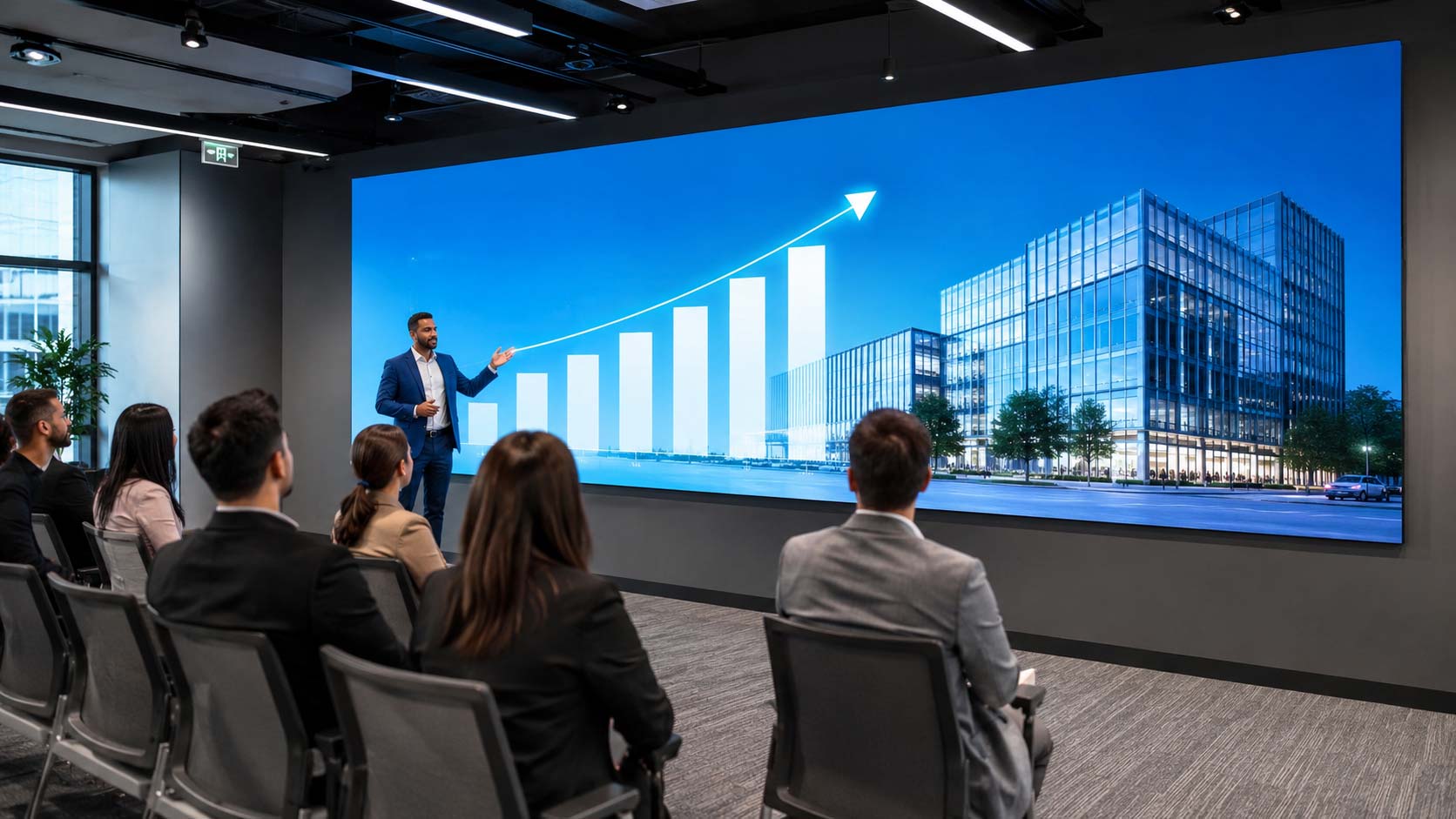
Pixel pitch and resolution should reflect how closely people will view the content. In breakout rooms, registration areas, and smaller conference spaces, finer pixel pitches help preserve text, charts, and presentation details at short distances.
In large exhibition halls and plenary spaces, priorities shift toward scale, legibility, and long-distance visibility. Properly specified LED wall packages can maintain visual impact without using unnecessarily fine pixel pitches in areas where viewers are farther away.
Wide Audiences Require More Than a Center View
Convention center audiences rarely remain directly in front of the stage. Attendees may watch from side aisles, exhibition booths, workstations, or secondary seating areas.
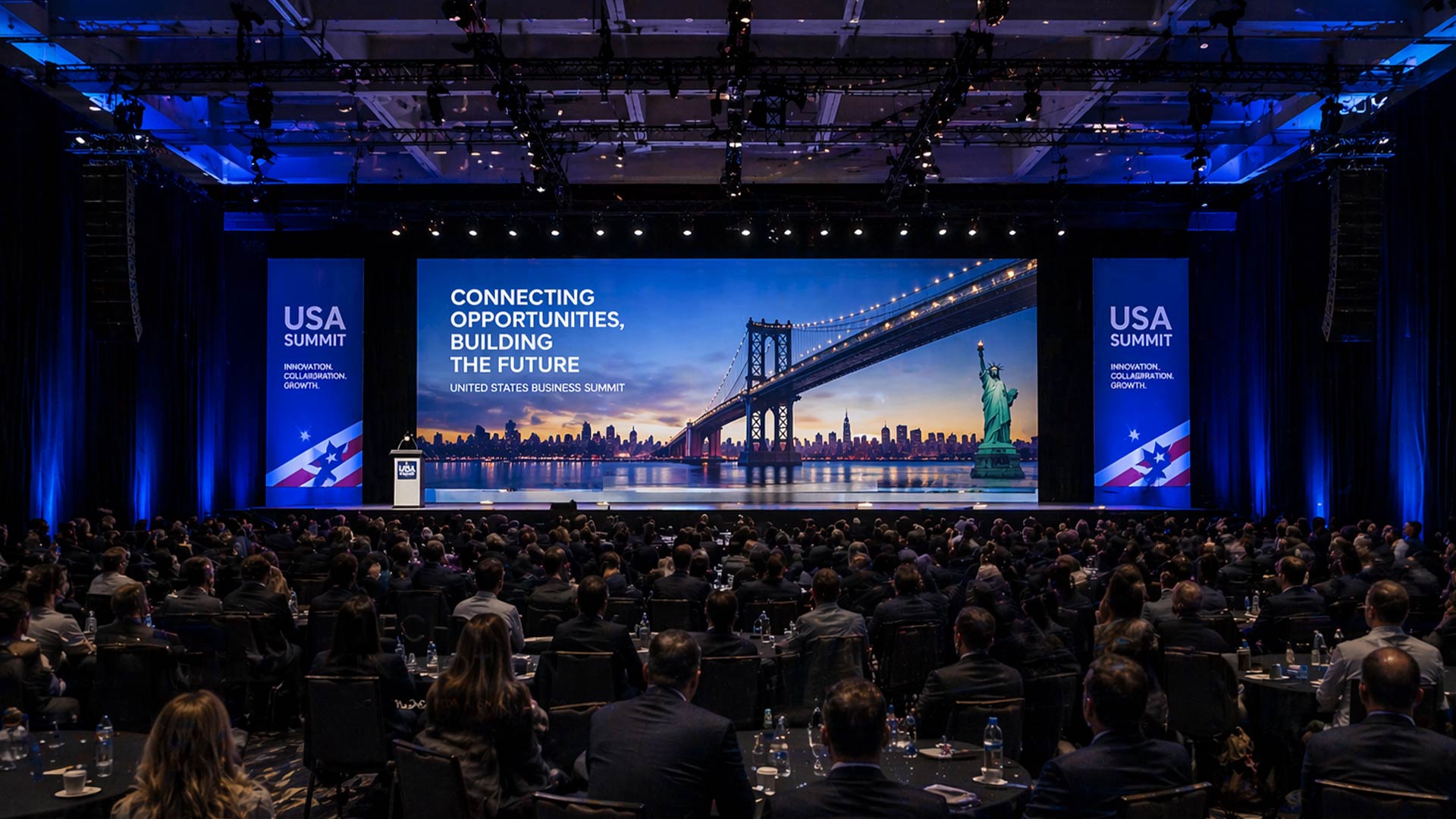
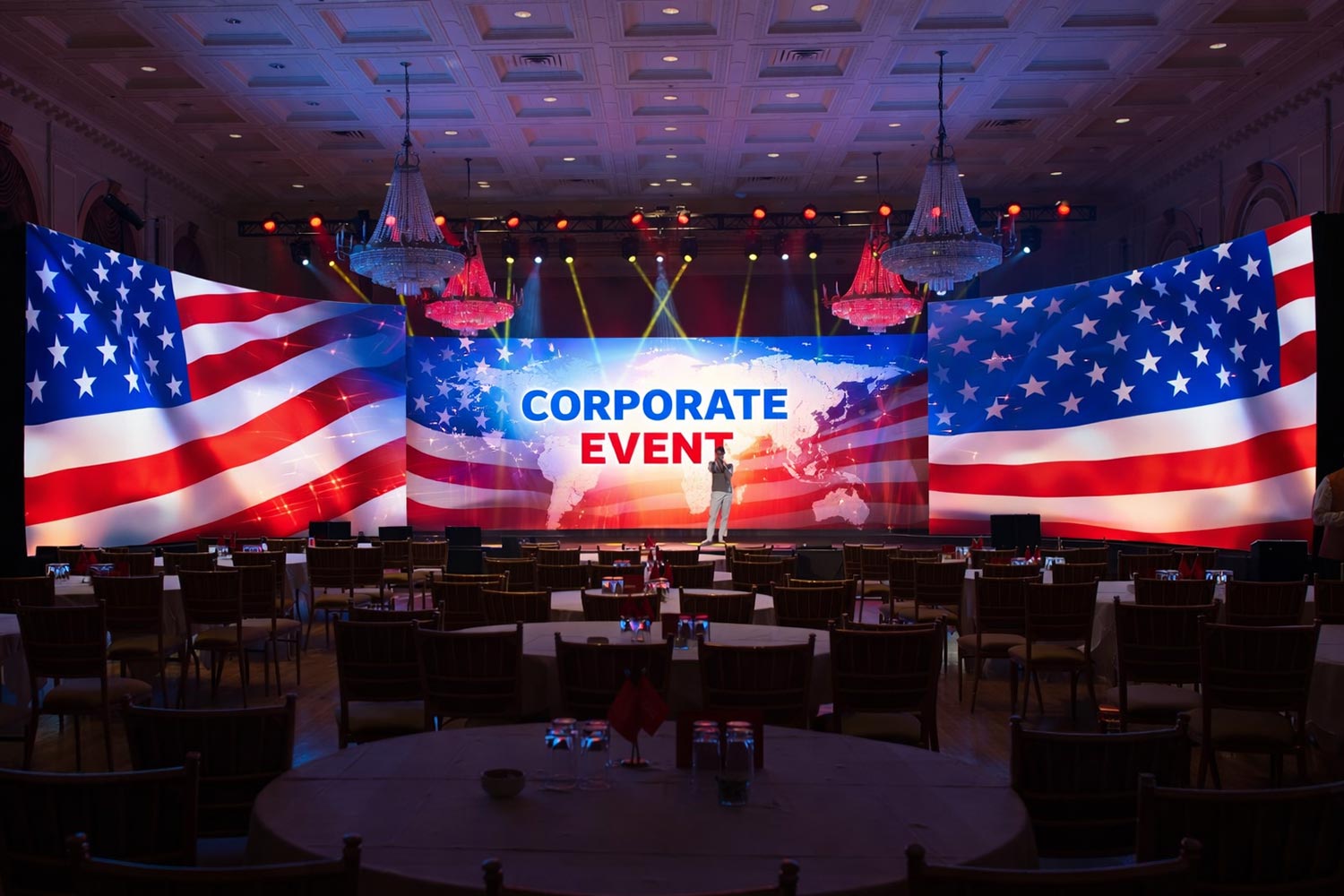
Secondary LED displays, relay screens, and curved configurations can help extend visibility beyond the center axis. The objective is a consistent experience from multiple positions without forcing every attendee to face the same direction.
Brightness Should Follow the Room
Lighting conditions can change dramatically throughout a venue, from dark presentation spaces to bright atriums or stages with strong production lighting.
LED panels should provide enough brightness range for controlled adjustment, allowing technicians to balance luminance and contrast for each environment. Proper calibration improves visibility while avoiding unnecessary glare in darker rooms
Prepare for a Complex Show-Day Signal Flow
Every Event Brings a Different Source
A convention center may receive video from speaker laptops, production cameras, presentation systems, media servers, broadcast equipment, conferencing platforms, signage players, and backup devices. The challenge is not simply accepting the signal, but managing all sources reliably.
LED video walls should be tested with the venue’s production software, network environment, switching equipment, and third-party AV systems before event day. This reduces compatibility issues and helps technical teams identify scaling, format, or routing problems in advance.
Common source types may include:
- Speaker and presentation computers with different resolutions and aspect ratios
- Live production cameras for IMAG and speaker tracking
- Presentation switchers and matrix systems used by AV operators
- Media servers for complex graphics and non-standard canvases
- Broadcast and streaming equipment for live distribution
- Video conferencing platforms for remote participation
- Signage players and backup systems for scheduled or redundant playback
Live Production and Scheduled Content Need Different Workflows
Live presentations, panels, and performances require low-latency processing so camera feeds, on-stage movement, and audio remain visually synchronized. In these environments, timing and signal stability take priority.
Scheduled content follows a different workflow. During breaks, registration periods, or exhibitions, LED walls may run playlists, sponsor loops, wayfinding, or event information. Here, automation, zoning, and content scheduling become more important than constant live switching.
The Processor Becomes the Traffic Director
The video processor serves as the central routing and mapping point for the visual system. Working with sending and receiving hardware, it manages source inputs, scaling, image placement, color processing, and distribution across the physical canvas.
For large LED display panels or unusual screen shapes, precise mapping is essential. A properly configured processor ensures each source is positioned correctly across the installed surface without distortion, cropping, or alignment errors.
Camera Performance Must Be Tested in Advance
When events involve cameras, streaming, or press coverage, LED screens should be tested on camera before the venue opens. A display that looks excellent to the eye may behave differently through a camera sensor.
Refresh rate, shutter settings, exposure, and panel calibration all influence recorded performance. High-refresh LED panels help reduce visible flicker and interference, while advanced testing gives camera and AV teams time to fine-tune settings before a live production begins.
Match the LED Panel Installation Method to Each Event Zone
Ground Support Adds Flexibility to Exhibition Halls
Ground-support structures work well in multipurpose halls where layouts change frequently. They allow LED video walls to be built in different sizes and aspect ratios without depending on permanent ceiling points.
This approach is especially useful when equipment must move, resize, or reconfigure between events, including trade shows, corporate meetings, banquets, and temporary branded environments.
Flown Displays Preserve Valuable Floor Space
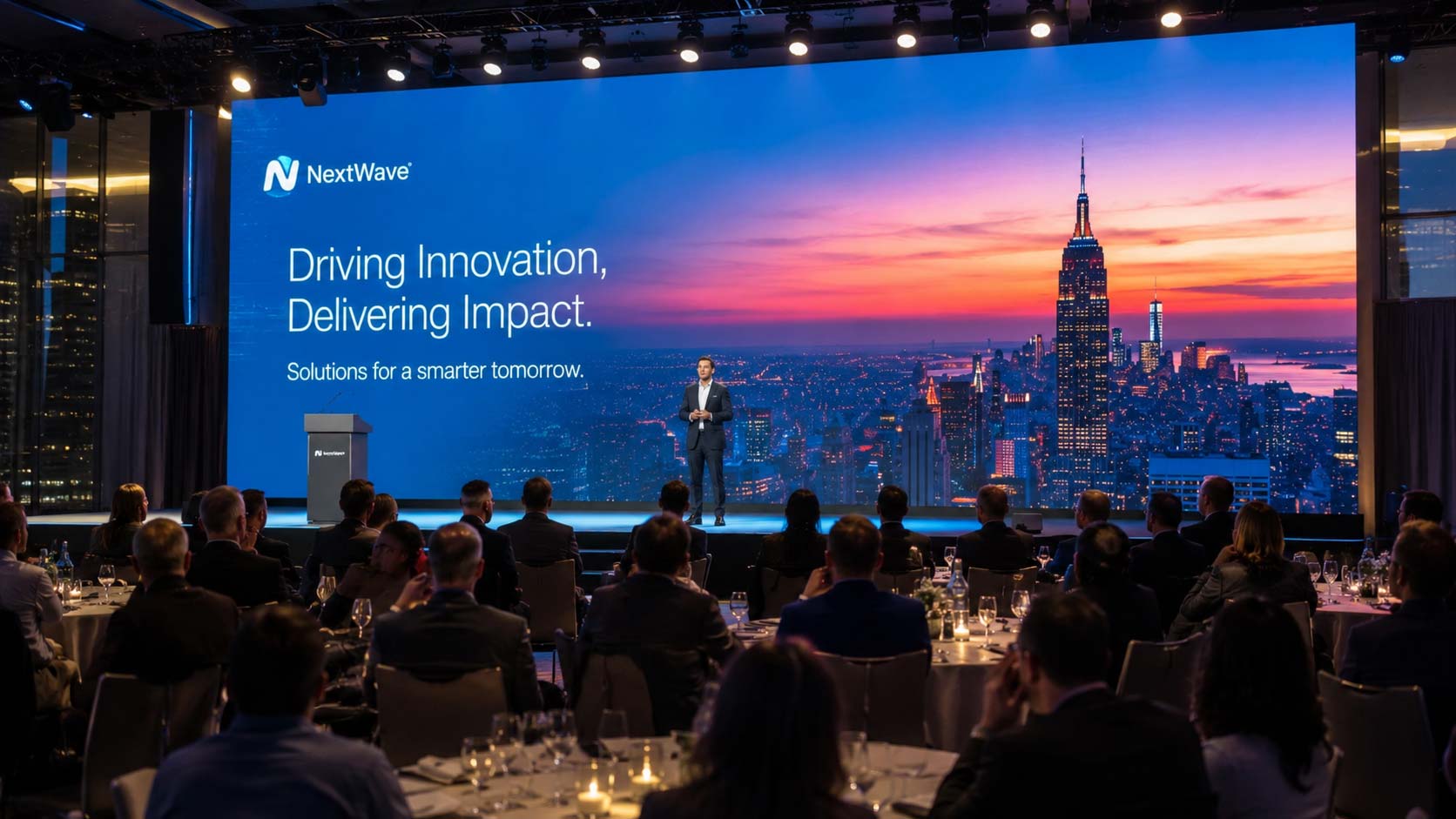
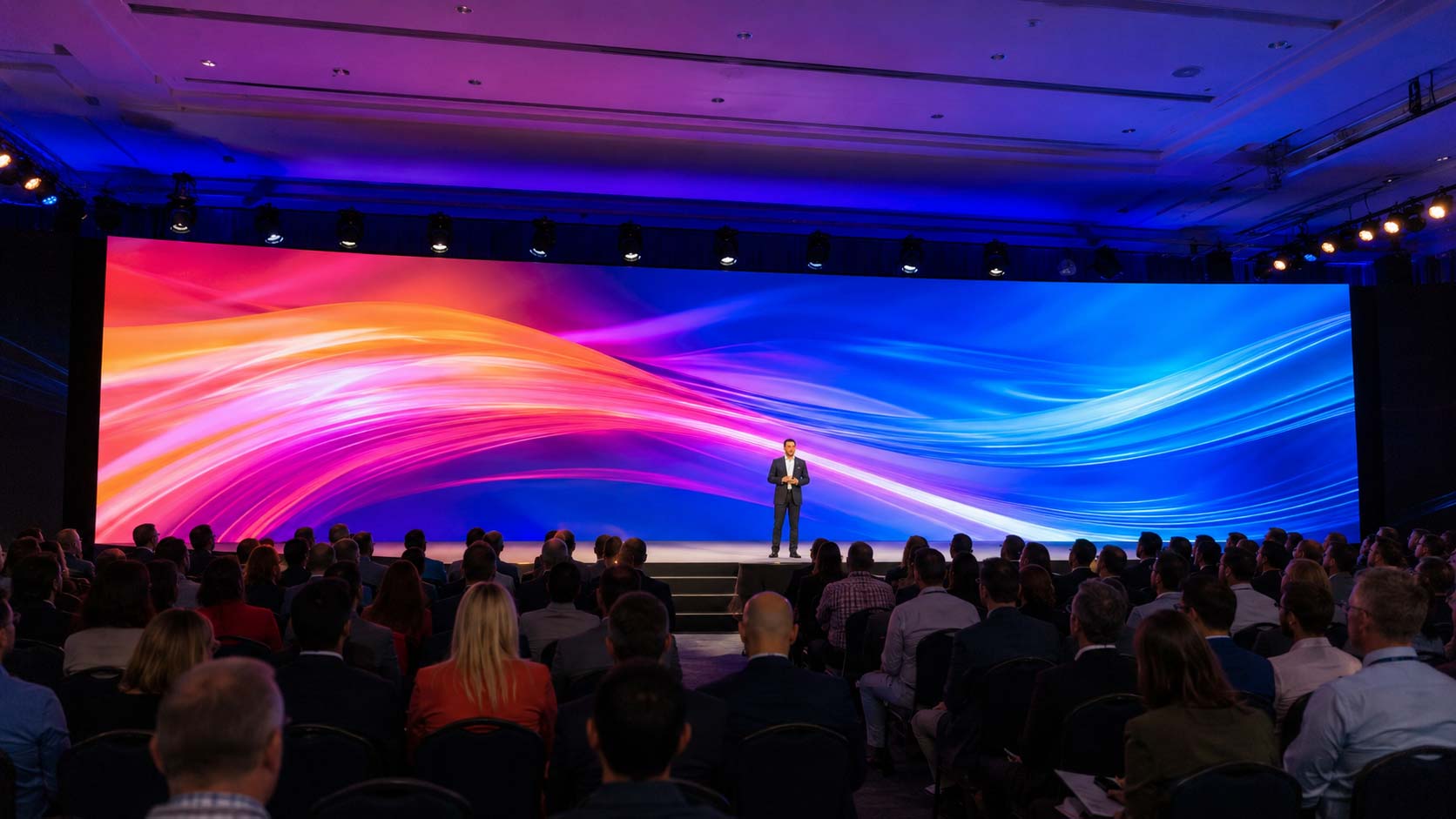
Rigged or flown LED displays are often used for large plenary sessions, main stages, and high-traffic spaces. Elevating the visual surface can improve sightlines while keeping the floor available for seating, booths, staging, and production areas.
For convention centers, this creates more usable space without sacrificing visibility, especially in rooms where audience density and circulation are major concerns.
Wall-Mounted Screens Create Permanent Venue Assets
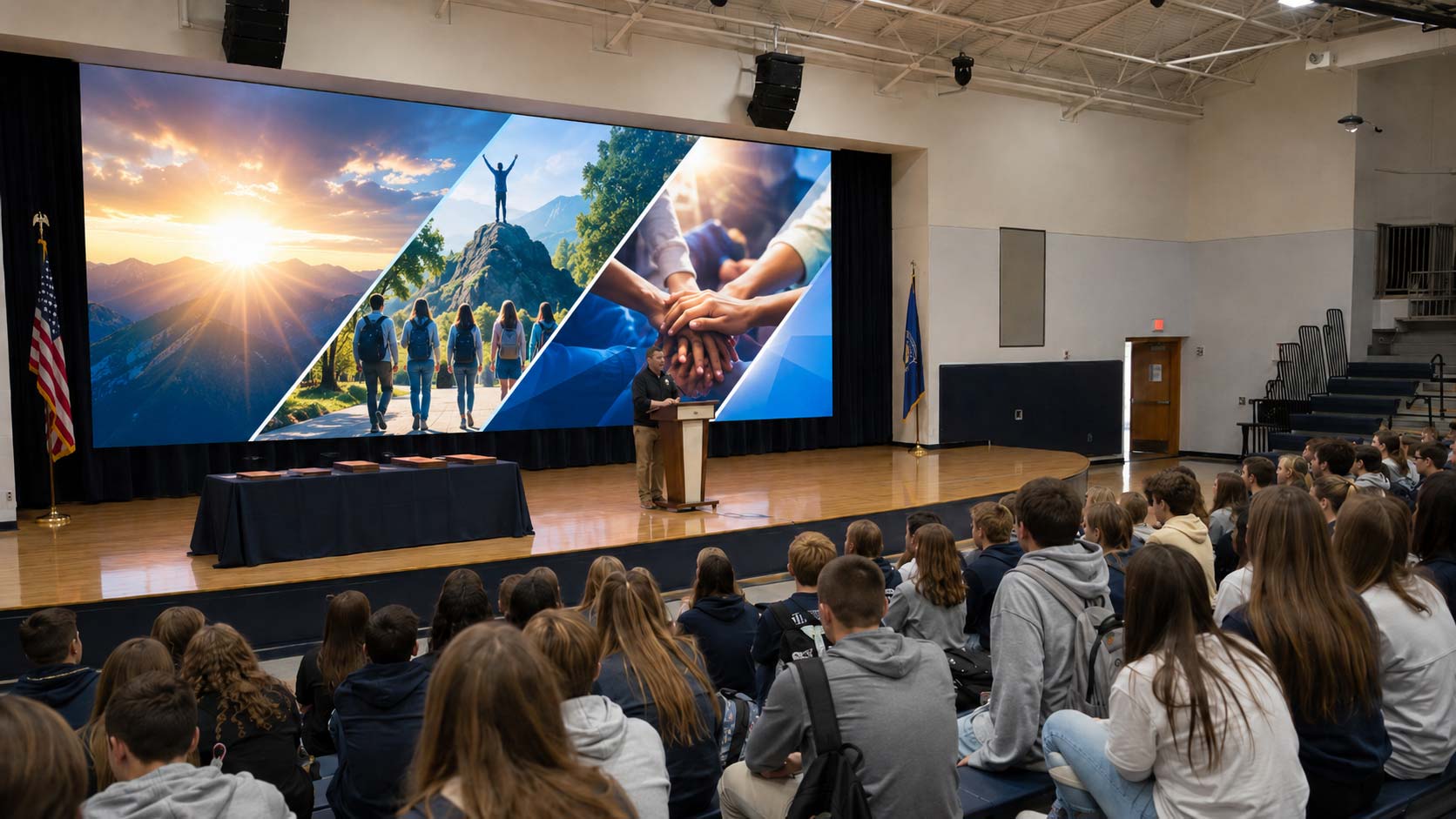
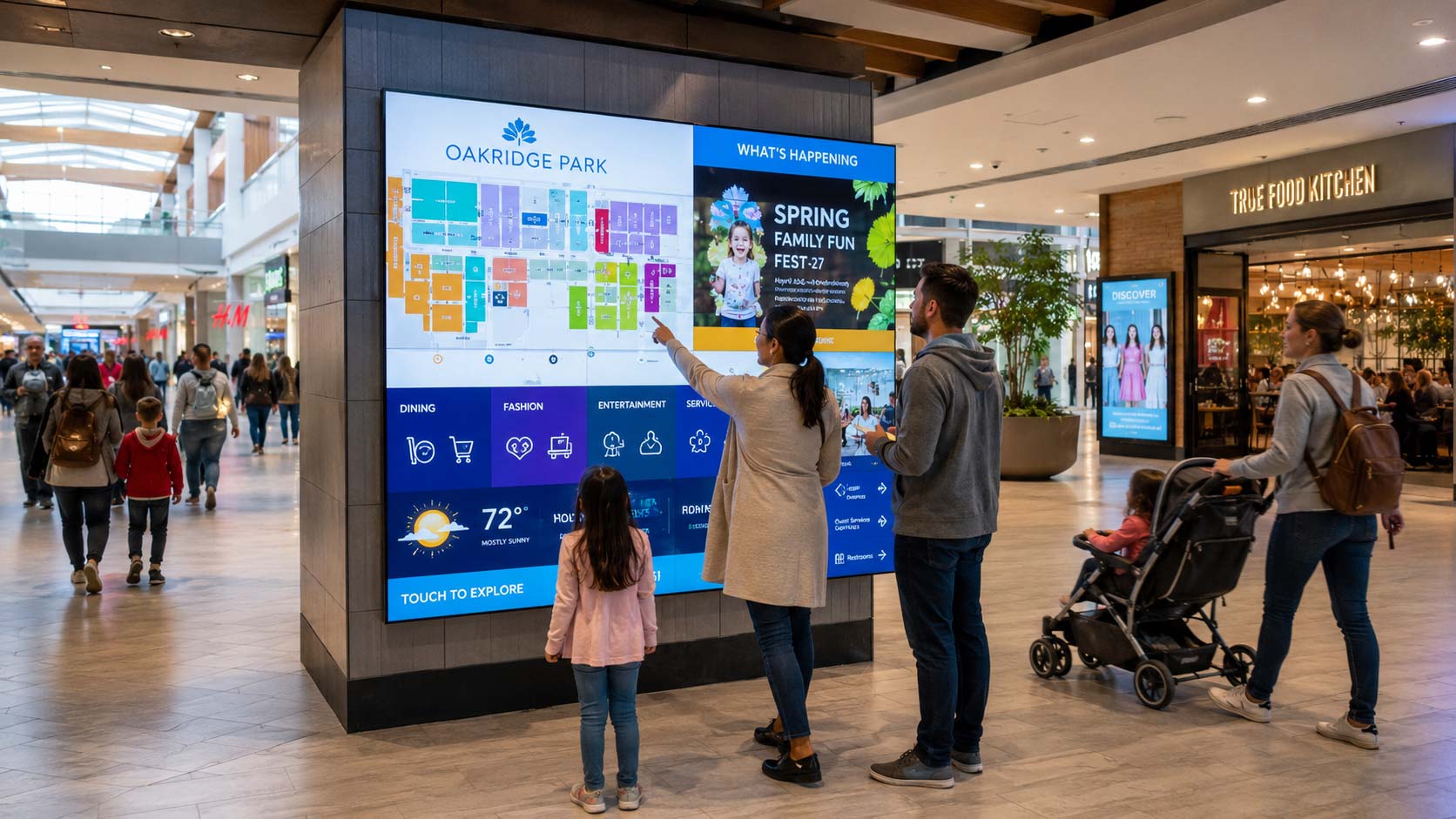
Permanent LED walls can support year-round functions in auditoriums, lobbies, registration areas, press rooms, and main corridors. Because they do not require temporary support structures, they provide a clean architectural finish and faster daily operation.
These installations can support digital signage, schedules, sponsor content, branding, and event messaging as soon as the system is powered on, making LED displays useful beyond major show days.
Environmental Protection Depends on the Zone
Protection requirements should match the actual conditions of each installation area. Indoor LED screens may use ratings such as IP45 depending on product design and expected exposure, while outdoor locations need stronger sealing against dust and water.
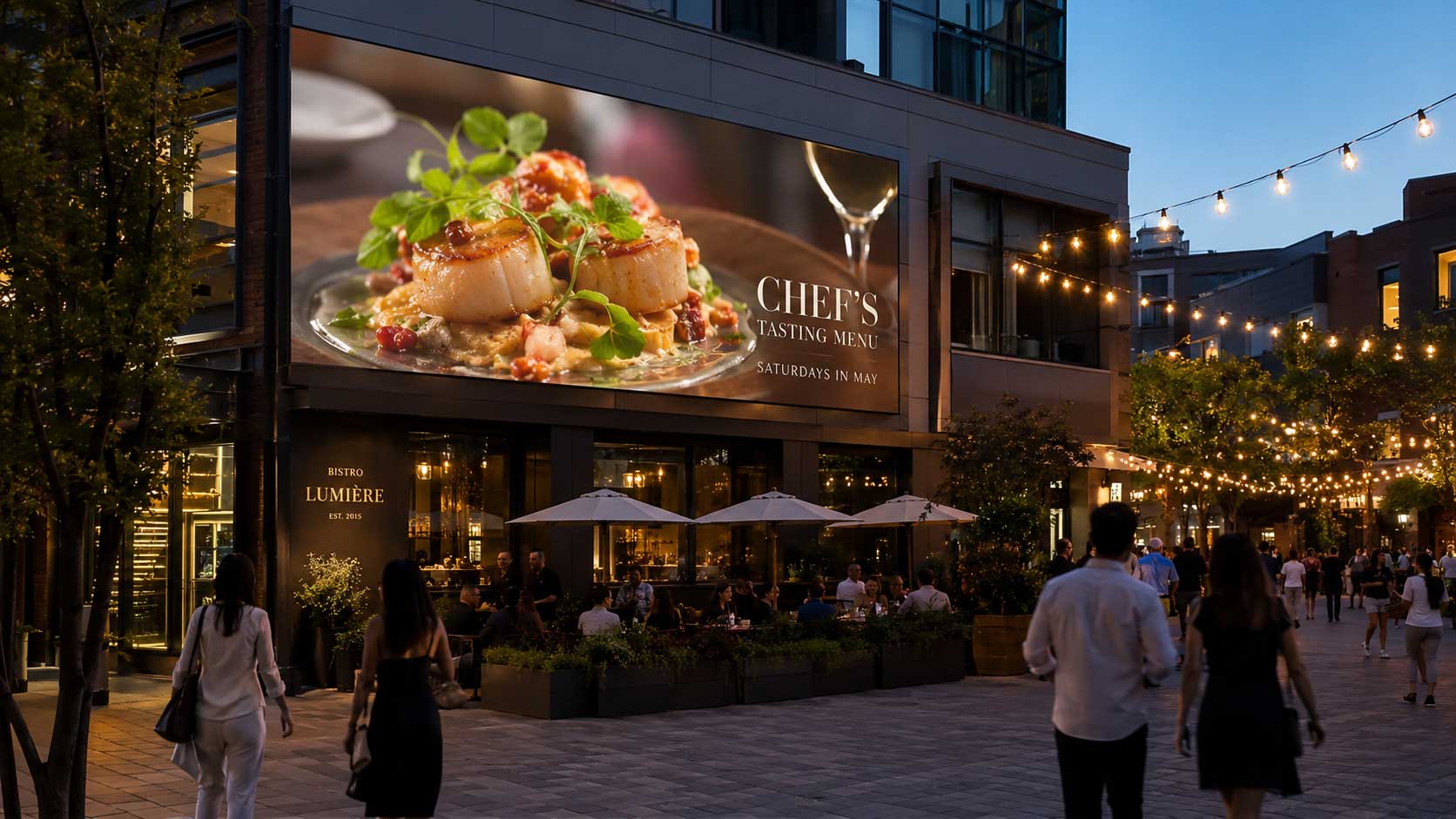
For exterior entrances, facades, loading areas, or open plazas, IP65-rated outdoor LED display panels provide dust-tight protection and resistance to water jets. Choosing the correct rating helps protect components and reduce avoidable maintenance over the life of the installation.
Build an LED System That Is Ready for the Next Event
Serviceability Protects Tight Production Schedules
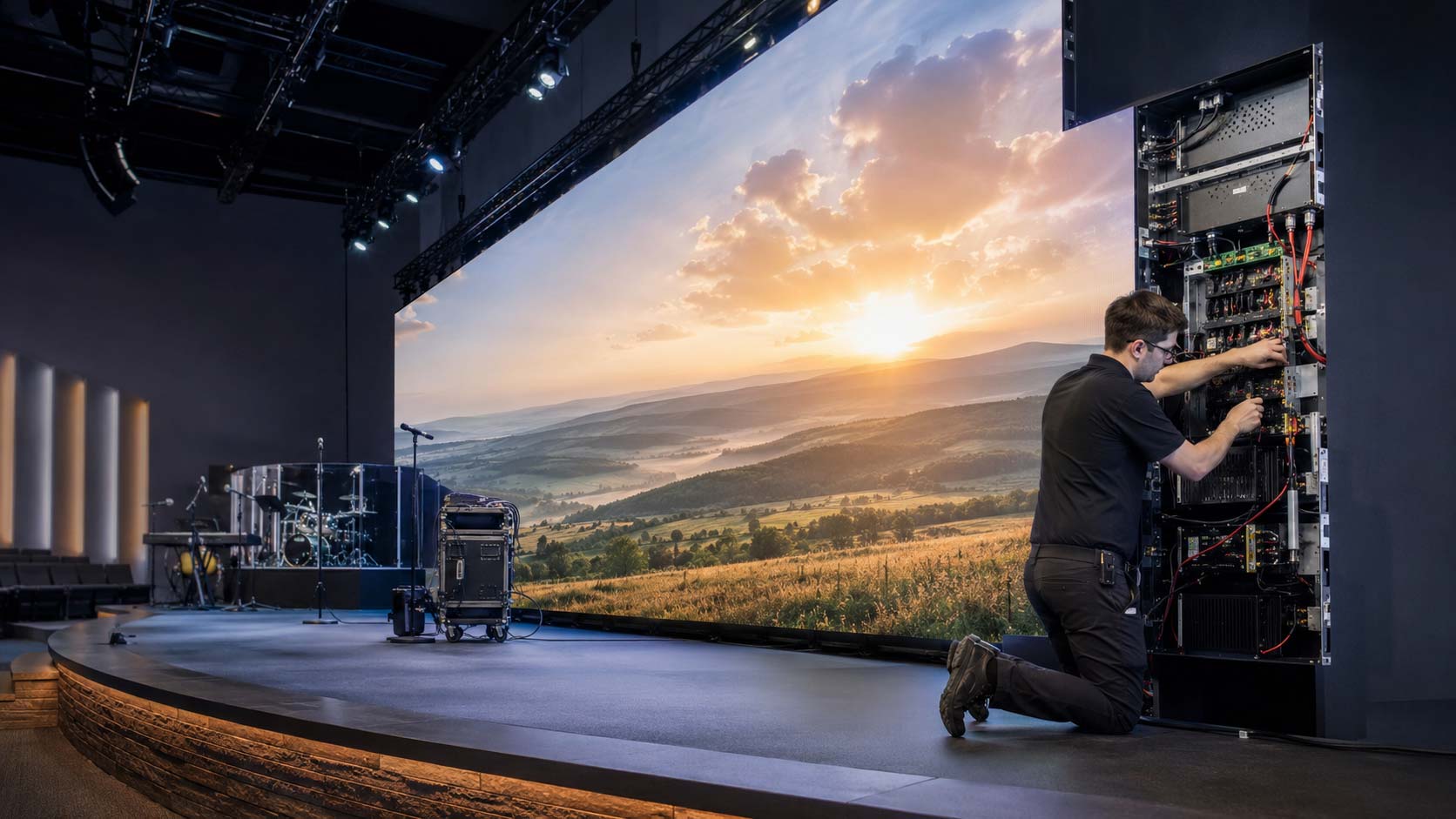
Convention centers often have only a few hours between teardown and the next setup. In that environment, a minor component issue can create a serious delay if technicians must dismantle large sections of a display.
Service-friendly LED panels allow modules, power components, and receiving hardware to be accessed and replaced more efficiently. Fast maintenance protects production schedules and reduces unnecessary downtime.
Standardization Can Simplify Venue Operations
Using compatible LED screens and maintaining a standardized pool of LED panels across multiple areas can simplify inventory, training, maintenance, and replacement planning. Standardization also makes it easier to share spare modules, power supplies, cables, and control hardware between rooms.
It can also reduce the learning curve for in-house teams. A consistent architecture makes troubleshooting faster across LED devices and control systems, helping technicians move between spaces without relearning a different platform each time.
Support Must Extend Beyond Opening Day
Long-term reliability depends on more than installation quality. Venues also need clear documentation, access to compatible spare parts, and responsive technical support after the system goes live.
For convention centers with demanding schedules, LED video walls should be backed by a support plan that addresses replacement components, diagnostics, and ongoing service. The same framework should extend across permanent and temporary LED solutions. American LED Screens supports its LED display panels with a five-year warranty and technical assistance designed to help venues maintain continuity without disrupting scheduled events.