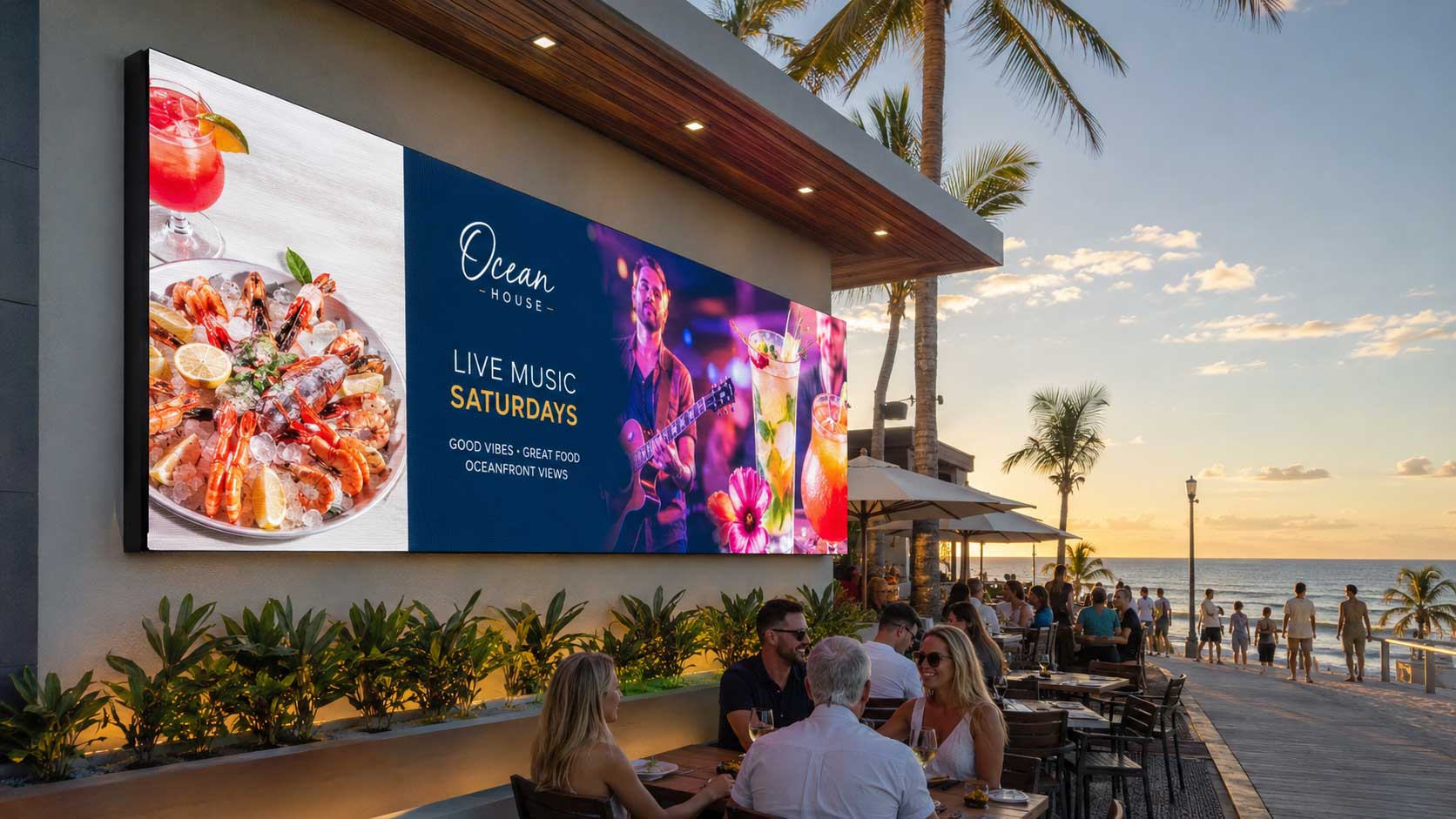
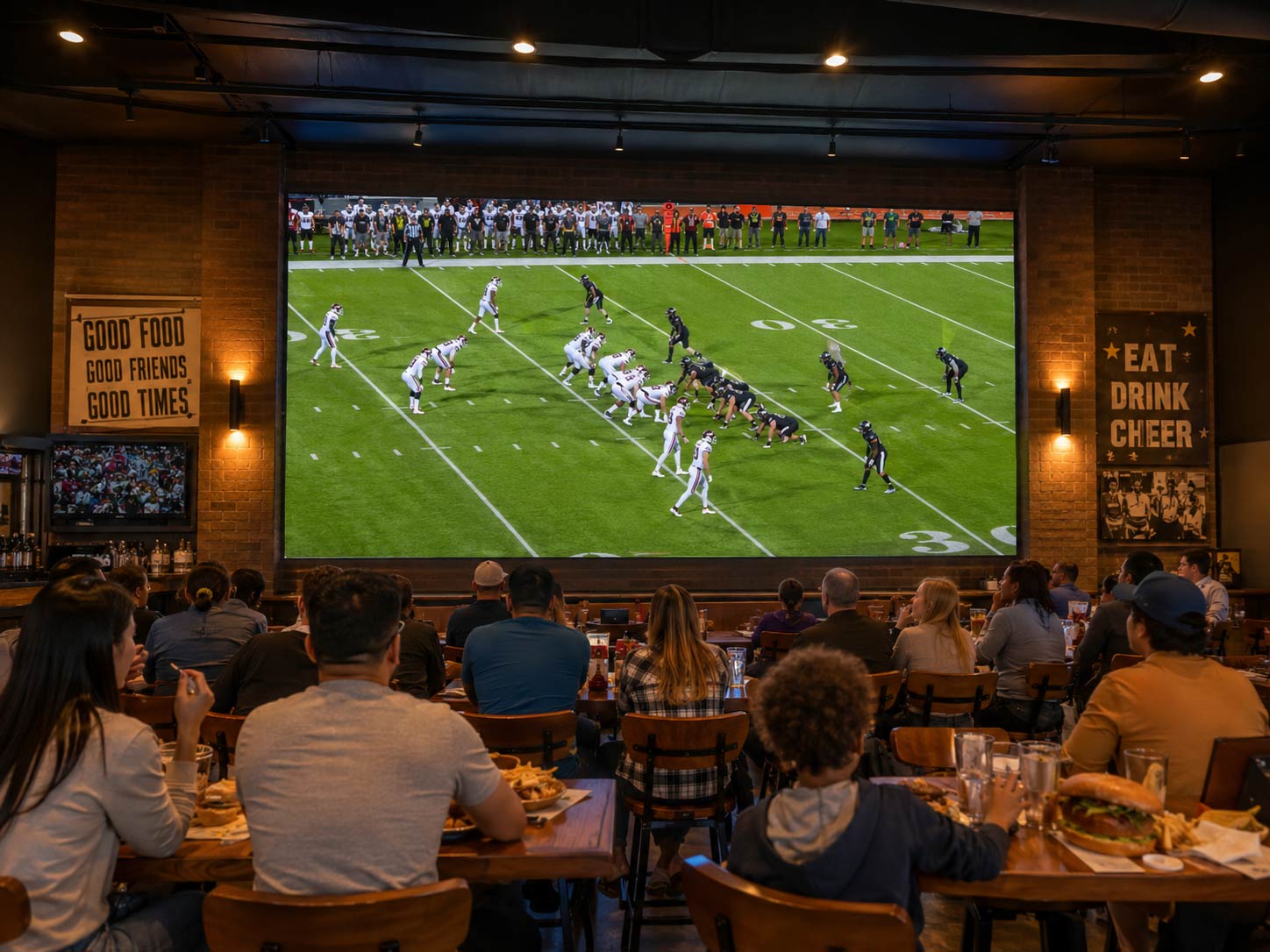
Outdoor LED walls must remain visible in direct sunlight without overwhelming viewers after dark. Running LED displays at maximum brightness around the clock wastes energy, creates unnecessary heat, and can make nighttime content uncomfortable to view.
Adaptive brightness addresses that problem by using ambient light sensors and control software to adjust output as conditions change. For LED video walls, this creates a more practical balance between visibility, energy use, and long-term performance while helping content remain clear throughout the day.
Outdoor LED Screen Brightness Is a Moving Target
Noon and Midnight Need Different Screens
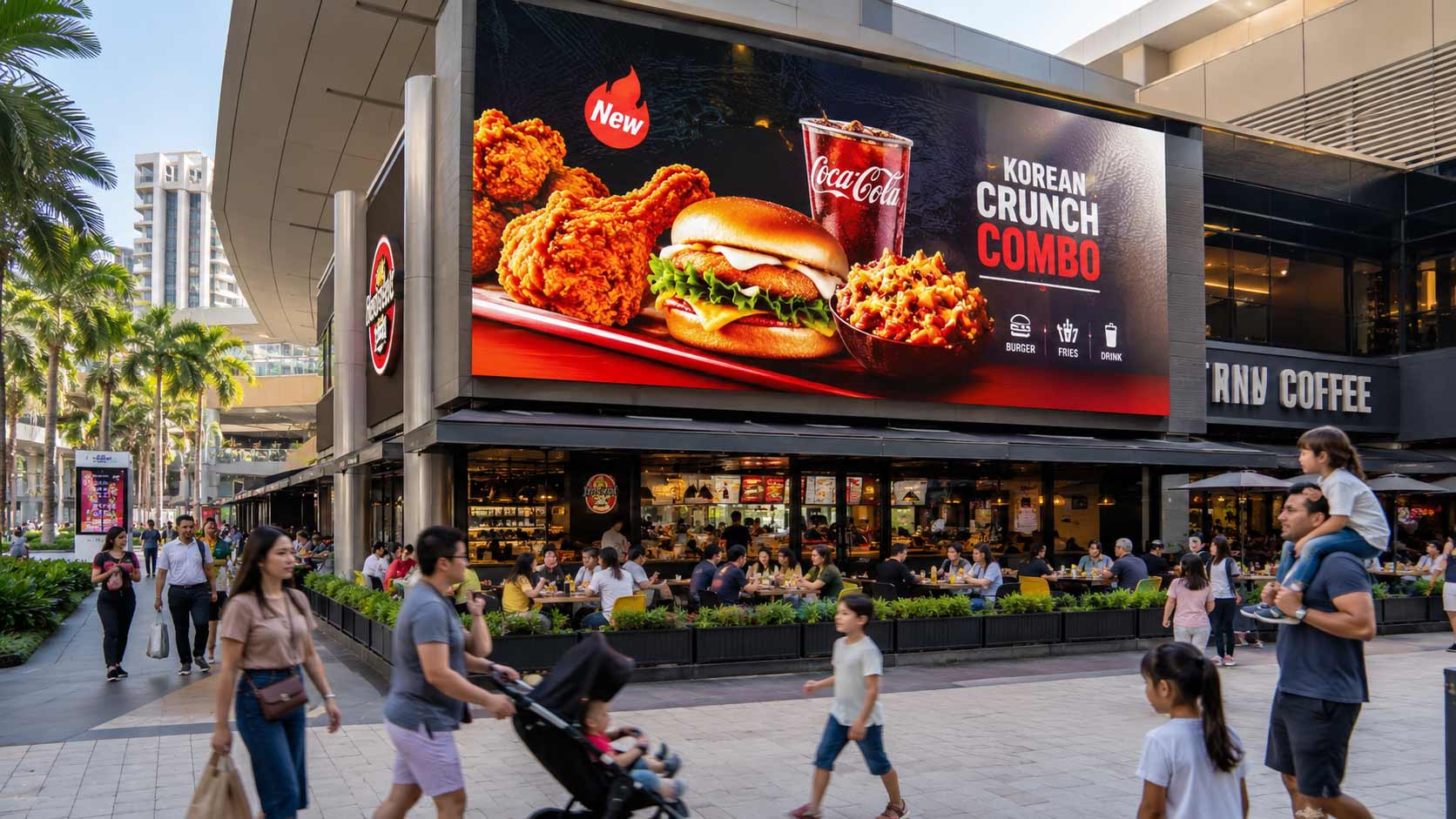
Outdoor LED walls operate in lighting conditions that can change dramatically within a few hours. At midday, higher output may be needed to compete with direct sunlight. At night, the same setting can produce glare and reduce perceived contrast. Brightness should respond to the environment rather than remain fixed at a worst-case daytime level.
Keeping LED screens at full output 24/7 increases power consumption and thermal load without improving visibility during darker periods. The goal is not maximum brightness at all times, but the right brightness at the right time.
Location Changes the Equation
Brightness requirements also depend on where LED display panels are installed. A west-facing facade may receive intense afternoon sun, while a shaded urban wall may need far less output for much of the day. Nearby glass, water, pavement, trees, and buildings can also change how light is reflected around the installation. Two sites in the same city can require very different brightness strategies.
That is why LED panels should be configured for their actual surroundings rather than a generic specification. Exposure, orientation, shade, and local weather patterns all influence the appropriate output range.
More Nits Are Not Always More Visibility
More nits do not automatically produce a better image. In moderate or low ambient light, excessive brightness can flatten contrast, oversaturate colors, and make LED solutions harder to look at. Visibility depends on controlled light output, not brightness alone.
At night, overdriven LED video walls can create distracting glare for pedestrians and drivers. They may also accelerate brightness and color degradation over time. Running a system harder than necessary adds operating cost without adding meaningful visual value.
Adaptive Brightness Lets the LED Wall Follow the Day
How the Screen Knows When to Adjust
Adaptive LED display packages use ambient light sensors to measure surrounding lux levels and send that information to the control system. The software then adjusts the current delivered to the LEDs, increasing or reducing light output as needed. This allows the display to react automatically without requiring constant manual adjustment.
For LED walls, properly positioned sensors are essential. A sensor exposed to unusual shade or direct reflections can produce readings that do not represent what viewers actually experience. Accurate placement helps the system respond to real viewing conditions.
Automatic Does Not Mean Uncontrolled
Professional brightness automation operates within preset limits. Minimum and maximum values can be defined so LED screens never become too dim for visibility or unnecessarily bright after dark. These limits keep automatic adjustments predictable and safe.
Control software can also use gradual transition ramps to prevent abrupt changes when clouds pass, or temporary shadows cross LED display panels. Time-based rules may add another layer of control, such as enforcing a lower maximum output after a specific hour. Automation works best when sensors, schedules, and limits support one another.
Brightness Can Work With Content Scheduling
Brightness control can also work alongside content scheduling. With synchronous LED panels, content is sent in real time from an external source such as a PC or media server, while the main control system manages output. The brightness setting changes without interrupting the video signal.
Asynchronous LED video walls store content locally and can follow programmed playlists without a continuous external source. Adaptive brightness rules can be saved within the control architecture as well. This gives operators more flexibility in locations where continuous network access is unnecessary or unavailable.
Better Visibility Is Really About Contrast
Fight Sunlight Without Washing Out the Image
Daytime readability requires enough output to overcome ambient light, but LED walls also need strong contrast and accurate color processing. Increasing nits without preserving black levels can leave an image looking flat or washed out. High brightness is useful only when image quality remains intact.
Outdoor LED screens also benefit from module surfaces designed to manage reflections. When light output, contrast, and surface treatment work together, the image remains clearer without relying on excessive brightness alone.
Nighttime Can Be Too Bright
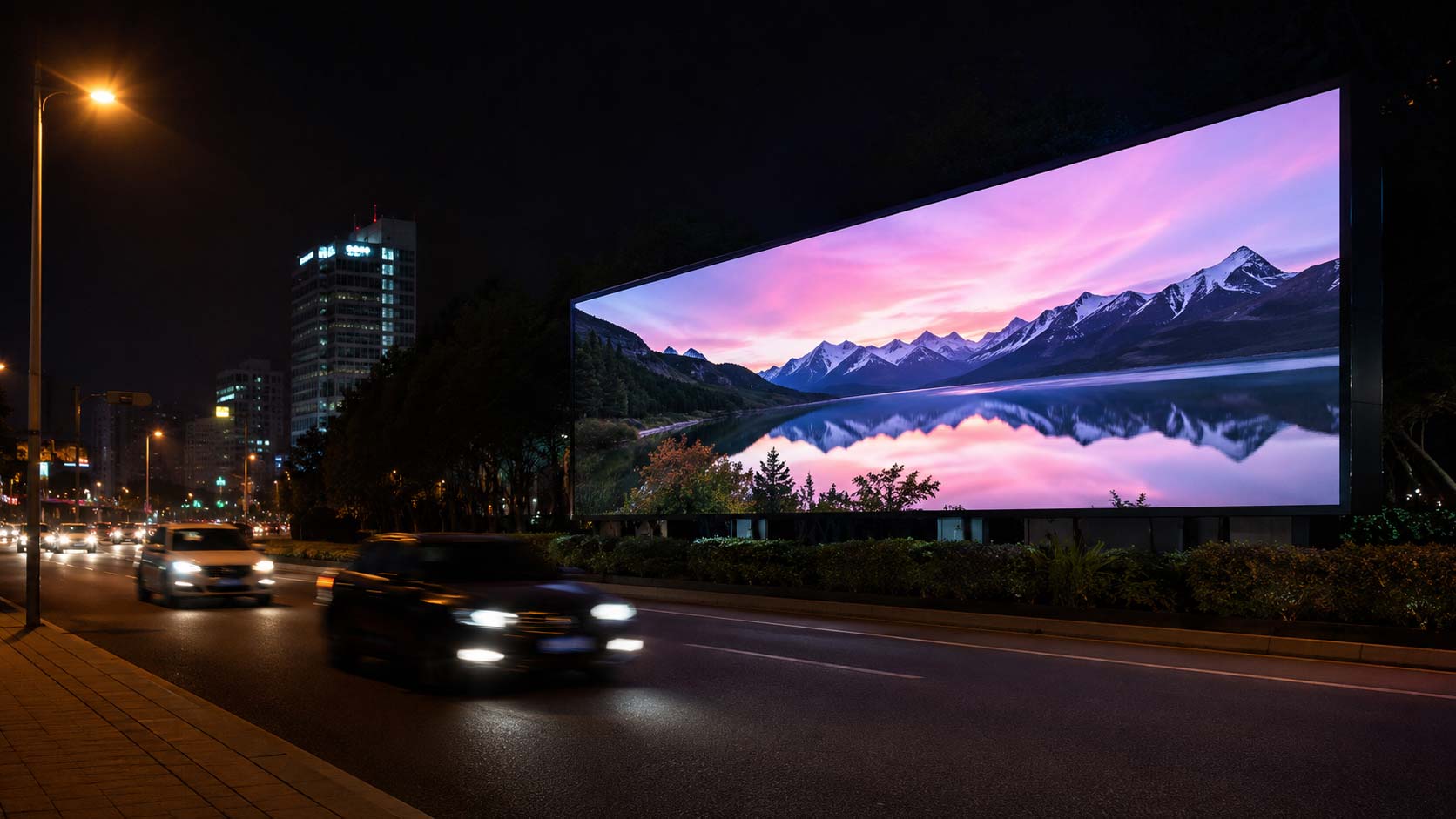
At night, excessive output creates the opposite problem. Bright areas can lose fine detail, colors can appear harsh, and glare can make LED display panels uncomfortable to view. A display that looked balanced at noon can become visually aggressive after sunset.
For roadside LED panels, this issue is especially important because excessive brightness can distract motorists and reduce visual comfort. Lower nighttime output can improve both readability and the surrounding viewing environment.
The Content Should Be Designed for Its Environment
Adaptive LED technology works best when the content itself is designed for outdoor viewing. Even a well-calibrated display cannot compensate for graphics that are too detailed, too low in contrast, or too difficult to read from a distance. Outdoor creative should communicate quickly and clearly.
- Use large, legible typography that remains readable from the expected viewing distance.
- Create strong foreground-to-background contrast so the main message stands out immediately.
- Keep messages brief for drivers and pedestrians who may only see the content for a few seconds.
- Avoid unnecessary fine detail that disappears at longer viewing distances.
Less Power Waste Has Benefits Beyond the Utility Bill
Why Maximum Output Costs More
Operating LED displays at full luminous output requires substantially more electricity. For large installations running 18 to 24 hours a day, that difference can become significant over time. Using maximum power when ambient conditions do not require it creates cost without improving the viewing experience.
Adaptive control allows LED devices to reduce output during lower-light periods and reserve higher power levels for the moments when they are actually needed. That makes energy use more closely match real operating conditions.
Lower Output Can Mean Less Thermal Stress
Brightness, power consumption, and heat generation are closely connected. When LED video walls operate at higher output, power supplies, LED panels, and internal electronics must dissipate more heat. Reducing unnecessary output can lower the thermal load across the system.
For LED walls, lower thermal stress can support more stable long-term operation and reduce wear on power supplies and electronic components. Better thermal conditions also help preserve consistency in brightness and color over time
Efficiency Should Be Measured Over Years
The value of LED screens should be evaluated across their full service life, not just by the first month of electricity costs. A more useful view considers capital expense, energy use, maintenance, and downtime together:
TCO = CapEx + Energy Consumption + Maintenance + Downtime
Well-managed LED display panels can reduce unnecessary energy use while limiting the heat that contributes to premature component wear. That combination can improve total cost of ownership over years of operation.
At American LED Screens, our equipment is backed by a 5-year warranty. Combined with proper brightness management and maintenance, that coverage supports a more durable, predictable investment for long-term outdoor use.
Brightness Control Only Works if the Rest of the LED Display Is Built for Outdoors
Adaptive brightness is only one part of outdoor performance. The mounting angle, cabinet ventilation, service access, and surrounding structure can all affect how LED display panels manage heat and ambient light. A well-designed installation helps the system achieve visibility without relying on unnecessary output.
For LED panels, shading elements or an appropriate mounting angle may reduce direct solar exposure, while adequate rear ventilation helps heat escape from power supplies and receiver cards. Thermal design matters even when the display is not operating at maximum brightness.
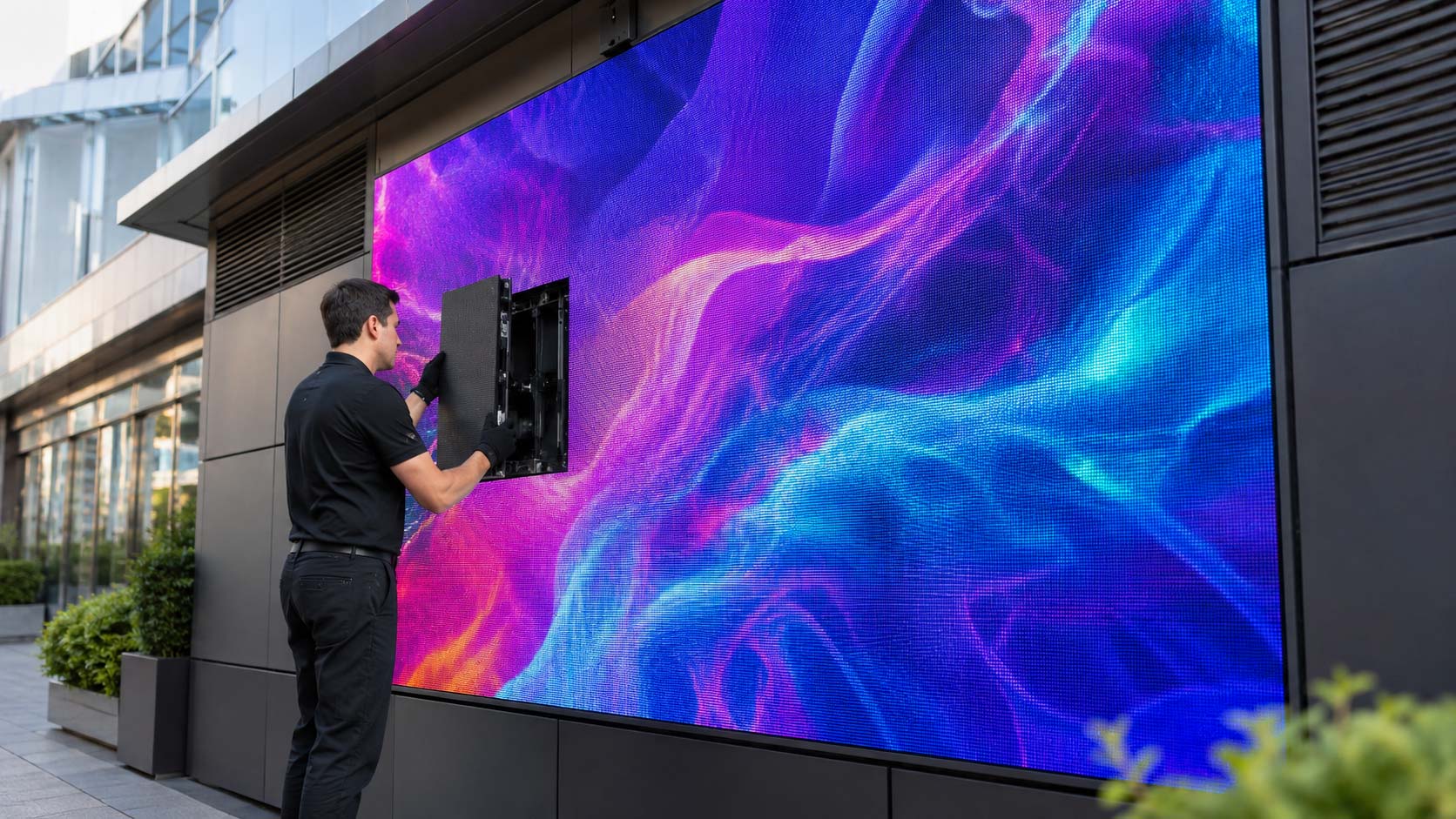
Serviceability matters as well. Magnetic modules and full front access can simplify maintenance on LED video walls installed against facades or in locations where rear service space is limited. Technicians can replace modules, power supplies, or control components without dismantling large sections of the installation.
The best outdoor LED displays are not simply the brightest. They combine intelligent brightness control, efficient thermal management, reliable hardware, and practical service access to deliver strong visibility with less wasted power.